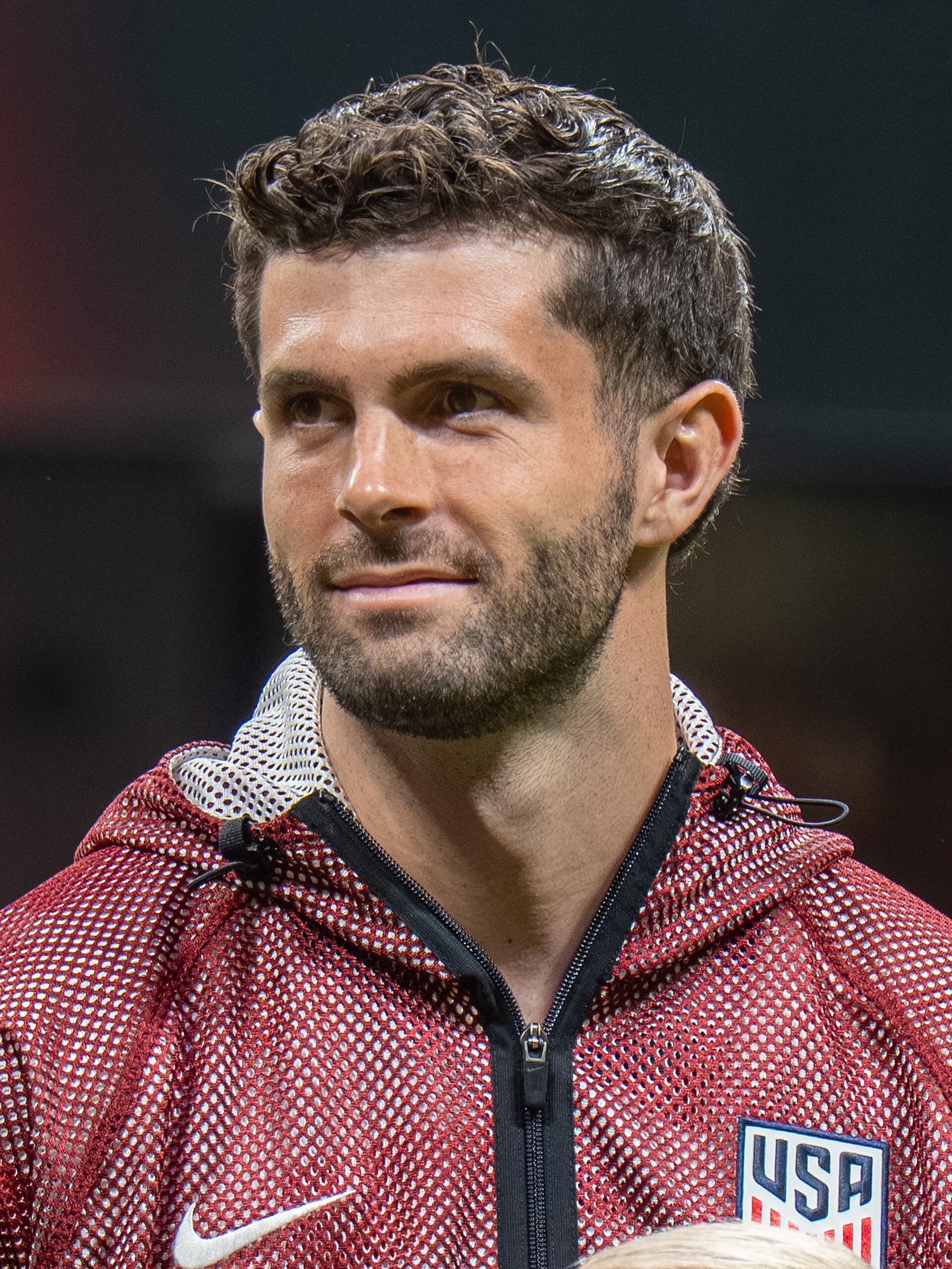
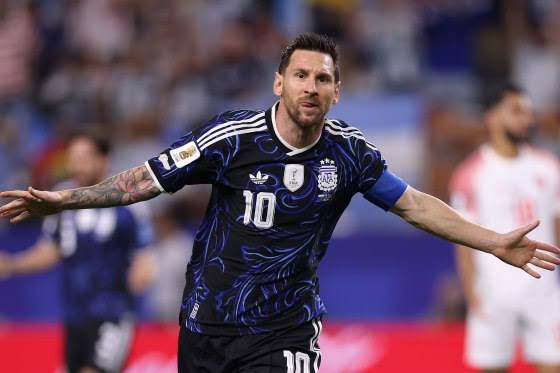
Why the USMNT Will Never Be Argentina (But Could Maybe Be France)
America can’t recreate the conditions and culture that spawn a Messi or Maradona. It must build its own soccer culture and institutions, and France provides a blueprint.
01The Hangover
There were six of us watching the Belgium game, everyone but me a casual World Cup-only type of fan.
My wife, my mom, my sister, my brother-in-law, and my six-year-old son. Not one of them could tell you what league Weston McKennie plays in. None of them knew that Folarin Balogun was born in New York, raised in London, and could have played for three different countries. They had no idea that Malik Tillman had spent two weeks turning himself into the best story in American soccer. They have not sat through any of it. No qualifying disasters, no coaching soap operas, no Trinidad. No scar tissue.
They were in the room because the World Cup was here and the United States was playing, and everyone had heard this was the year it could be different.
That is the part that is hard to shake. Losing to Belgium is not some unforgivable stumble. Belgium is a good team. They were better than us. That happens. What has been sitting in my chest since the defeat is that for once, everybody was watching.
This is the thing American soccer has been asking for since I was a kid. Just watch. Give us one game. Turn it on and you will see what we have been telling you about. And they did turn it on, all of them, at a normal hour, on a channel everybody gets, to watch their own country play a knockout game at home.
What they saw was the same old US team.
A team that looked scared by the moment. A team that couldn’t string together passes. A team that made silly mistakes typical of talent-deficient squads in over their heads.
A team that, to them, was thoroughly defeated by a nondescript European opponent.
As the game spiraled to its inevitable conclusion, attention scattered. Somebody joked about the lack of technical proficiency. Others looked at their phone. Somebody said “well, it’s better than last time” in the voice you use on a kid who did not make the team. Nobody was mad. That is what got me. Anger would have meant they cared. They just got up and wandered into the kitchen, and the World Cup went back to being something happening on the other side of the window.
I could have told them that the xG was 2.15 to 0.67, that Belgium created four big chances to our zero, that we had 56 percent of the ball and did absolutely nothing with it. I could have explained that three of those four goals were self-inflicted and that this was a bad night rather than a true measure of the gap. I did not bother, because it would not have mattered, and because it would not have been the whole truth anyway.1
They may not know who Kevin De Bruyne or Jeremy Doku are, but they know that Belgium is not Brazil, or Argentina, or France. They are a solid European team having a good tournament. We did not lose to the eventual champion and go down swinging. We lost to a team that went home too, and by the time it happened, America had already changed the channel.
That is the hangover. Not the defeat, but the shrug that came after it.
And when you are the host, the shrug does not end, because the tournament does not end. There is no flight home. There is no airport, no press conference, no closure. The thing just keeps going without you, in your stadiums, in your time zone, at an extremely convenient kickoff time. The semifinals are being played in American cities this week. On the 19th, the final will be at MetLife Stadium in New Jersey, in a building that hosts the Jets and the Giants, and eighty thousand people will pack an American parking lot to watch two other countries play for the only trophy that matters.2
We threw the party and got thrown out of it.
I was nine years old the last time we hosted.
I watched the 1994 World Cup roughly the way my son watched this one, which is to say without much understanding and with total certainty that it was the biggest thing that had ever happened. The US made the round of 16 and lost 1-0 to Brazil on the Fourth of July. Brazil went on to win the whole tournament. Losing to them did not feel like a ceiling. It felt like an introduction.3
That tournament was about something different. It was about a kickstart to soccer culture in America. Bringing the game’s stars to our shores, jump-starting a new professional league. Planting the seeds in the proper soil for soccer to become one of our major sports. For the US to become one of the global powers. Someday, the World Cup could return to this country and we could have a real chance to win it all. Everyone said it. I believed it.
My son is six. He watched the same team reach the same round and go out the same way, and the only real difference between his experience and mine is that his came with better graphics and higher expectations.
This is not to say that nothing has changed. Plenty changed. We got the league we promised, and then we got it to thirty clubs with real stadiums and real owners and real money. We built academies. We built a national training center. We now have kids signing professional contracts at Dortmund and PSV and Juventus and Milan, playing at a level my father could barely have imagined for an American player. Somebody handed us a recipe and we followed it, at enormous expense, for thirty years.
We went into this World Cup ranked 17th in the world.4
We already know how the next few months go, because we have done it before. The takes are half-written. Is it the coach? Is it the players? What if our best athletes played soccer? What if we had the best professional league in the world like most other sports?
Somebody will bring up the 2002 quarterfinal, which is about to turn twenty-five years old and is still the high-water mark. There will be a list of promising young players, because there is always a list of promising young players. Alex Freeman is 21. Malik Tillman is 24. Cavan Sullivan is the next big thing. Wait until 2030.
Fine. But we have to be honest about what the waiting has produced.
1990: three games, three losses. 1994: round of 16. 1998: dead last in the entire tournament. 2002: quarterfinal. 2006: group stage. 2010: round of 16. 2014: round of 16 (lost to Belgium). 2018: did not qualify. 2022: round of 16 (lost to Netherlands).3
And now 2026, at home, with the deepest roster this program has ever had, the most expensive coach it has ever hired, and every single match played on American soil: round of 16.
Thirty-six years. One quarterfinal.
This is one of the best groups of players we have ever put on a field. They won the group, they won a knockout game, they played with a real, effective tactical identity for the first time in my life. Sure, you can blame the goalkeeper, or Pulisic, or old man Tim Ream, but the mistakes are not the real story. The story is that the ceiling did not move.
Afterward, everyone said the same thing in the same words, the way we always do. They are not ready yet.
Yet.
That word is doing an incredible amount of work in American soccer, and it is running entirely on credit. Yet implies a schedule. It implies that a plan exists, that we are partway through it, and that if we keep doing what we are doing we eventually get there. Every four years we say yet.
So the question I actually want to answer is not what went wrong against Belgium. It is this. What would specifically have to be true, mechanically, not vaguely and not eventually, for the United States to become one of the six or seven countries that can win a World Cup? Not qualify. Not advance. Win it.
My son’s new USMNT jersey is still sitting on top of the laundry pile. I bought it for him two weeks ago, a size too big, so he could grow into it. This was supposed to be the run that made him a fan for life. Instead it was the run that taught him what the rest of us already knew.
Four years ago the last two teams standing were Argentina and France. This week, they are both back in the final four.
They are the two best answers anyone has to the question I just asked, and they do not agree with each other. One of them built what it has over a century, from the ground up, out of neighborhoods and poverty and obsession, and could not explain to you how it happened if it tried. The other one sat down about forty years ago, looked at the problem like an engineering problem, and built the machine on purpose.
We are never going to be Argentina. France, though. France we might be able to be.
02Two Models
The 2022 final was not just one of the great games ever played. It was two entirely different theories of how a country becomes great at this sport, put on a field together for 120 minutes.
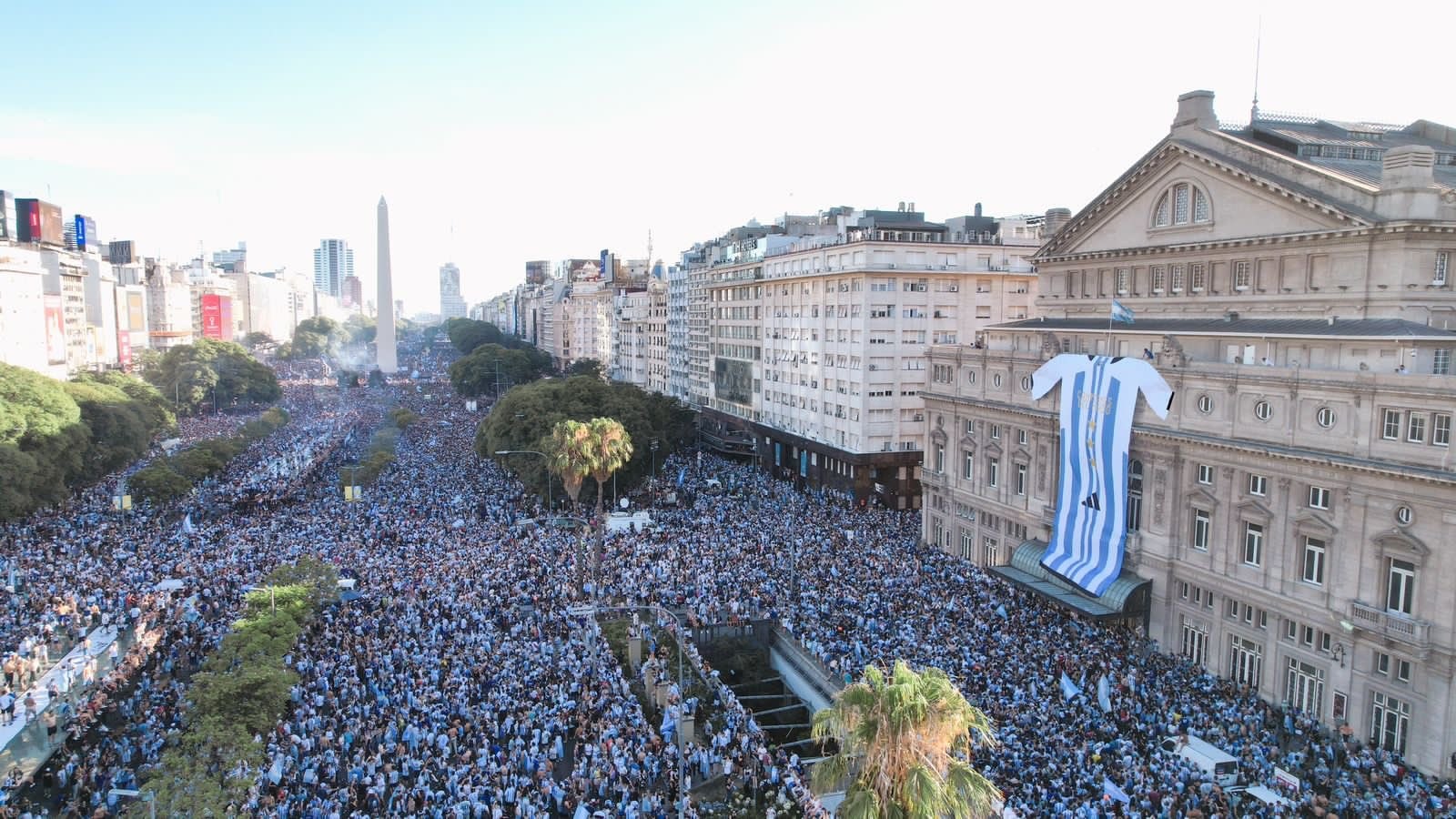
Argentina played that game carrying forty-six million people on its back, and you could see it. The cameras kept finding people in the stands crying before kickoff. They sang through the warmups, through the lead, through France coming back, through extra time and penalties, and then Montiel scored and Messi went down on his knees and the whole thing came apart. When the team got home, something like four million people came out for the parade. The bus could not physically move. They had to pull the players out by helicopter. Roughly a tenth of the country tried to stand on the same street at the same time.5
France was a different animal entirely.
France was awful for an hour of that final. Argentina was better everywhere on the field, and Deschamps got so impatient he started pulling players before halftime, taking apart the team that had carried them through the whole tournament while the game was still going on. It should have been over. And then, out of nowhere, the thing started running again. Mbappé scored twice in ninety-seven seconds. France drew level a second time in extra time. Mbappé finished with a hat trick in a World Cup final, which nobody had done since 1966, and then buried his penalty in the shootout.6
France lost that game and still looked inexhaustible. Every time Argentina thought they had killed it, somebody else came off the line.
Argentina had Messi, who is the final and greatest expression of a soccer culture that was there long before he was born and will be there long after he is gone.
France had an assembly line.
Argentina won the World Cup in 1986 and then did not win another one for thirty-six years. In those thirty-six years they had Batistuta, Verón, Crespo, Riquelme, Zanetti, Ayala, Cambiasso, Tévez, Agüero, Di María. Astonishing players, one after another, and one final in 1990 and one in 2014 and nothing to show for either. They were waiting for the next Maradona. And the next Maradona took thirty-six years to show up, and then needed until he was thirty-five years old to finish the job.7
You cannot schedule a Messi. Nobody can. That is what it means to be a country whose greatness is grown rather than built: when it comes, it is the best thing on earth, and when it does not come, you wait, and there is nothing anybody can do to hurry it along.
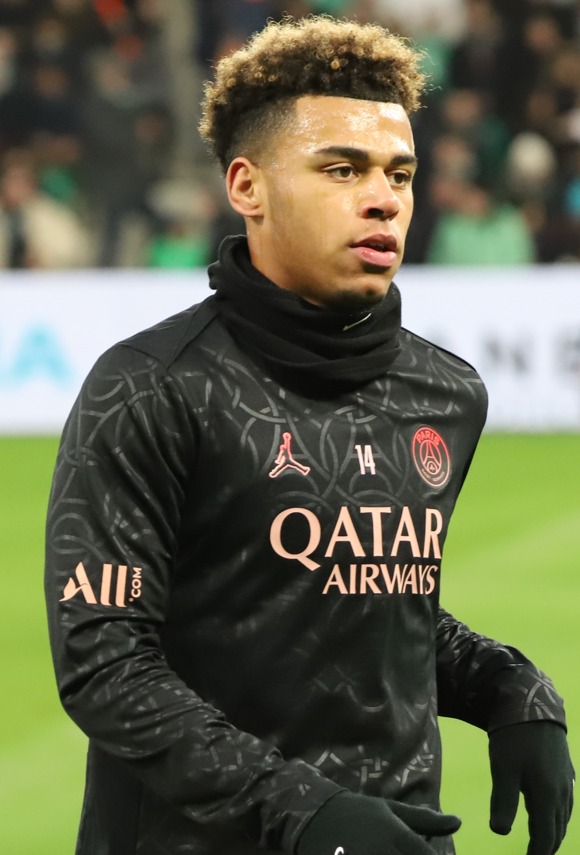
France does not wait. Zidane retires, and along come Ribéry and Benzema, and then Pogba, Kanté and Griezmann, and then Mbappé. And sitting behind Mbappé right now, most of them not even starting at this World Cup, are Doué and Cherki and Barcola and Zaïre-Emery and Olise, any one of whom would be the most talented player the United States has ever produced.
 Désiré Doué
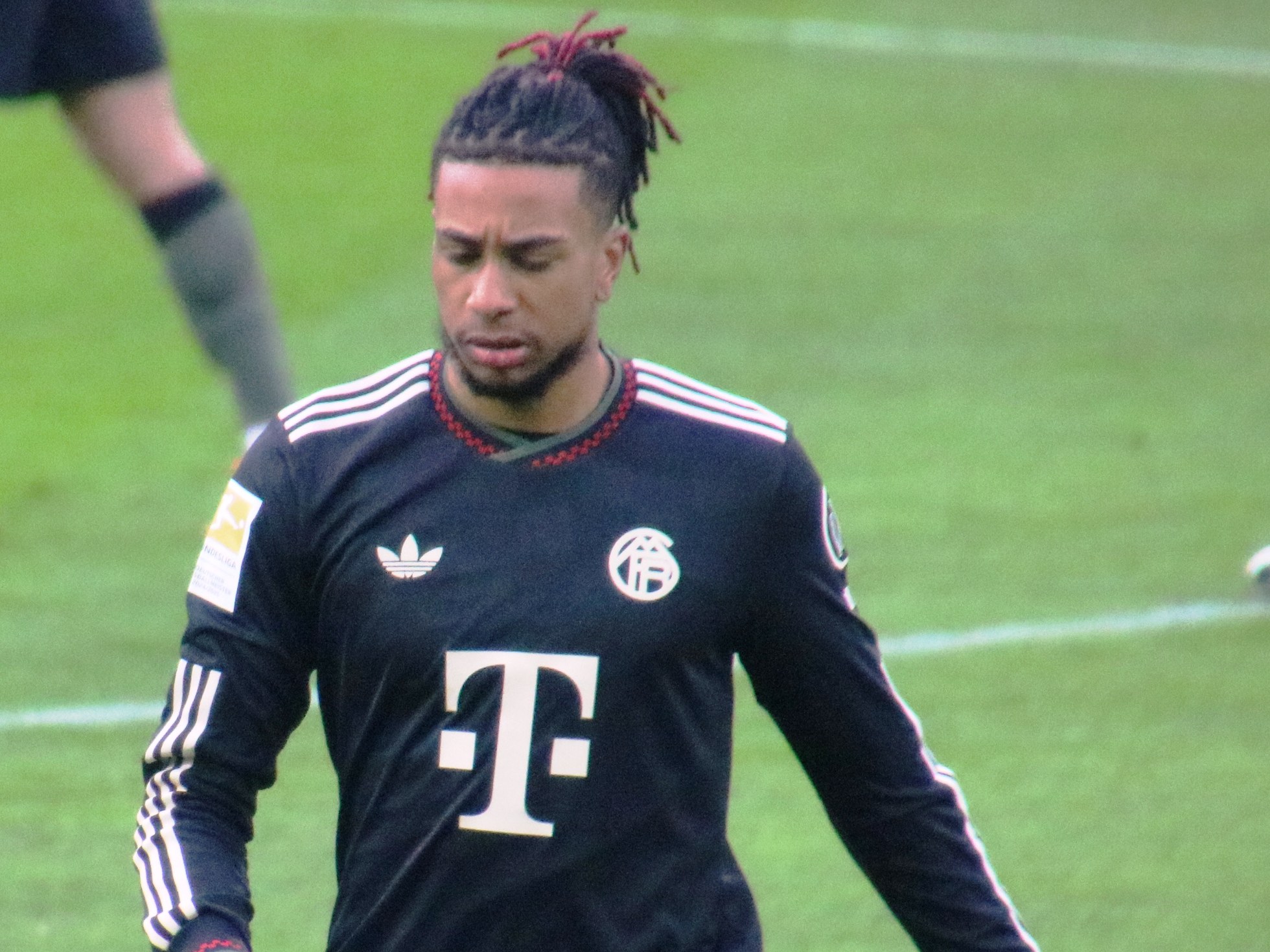 Michael Olise
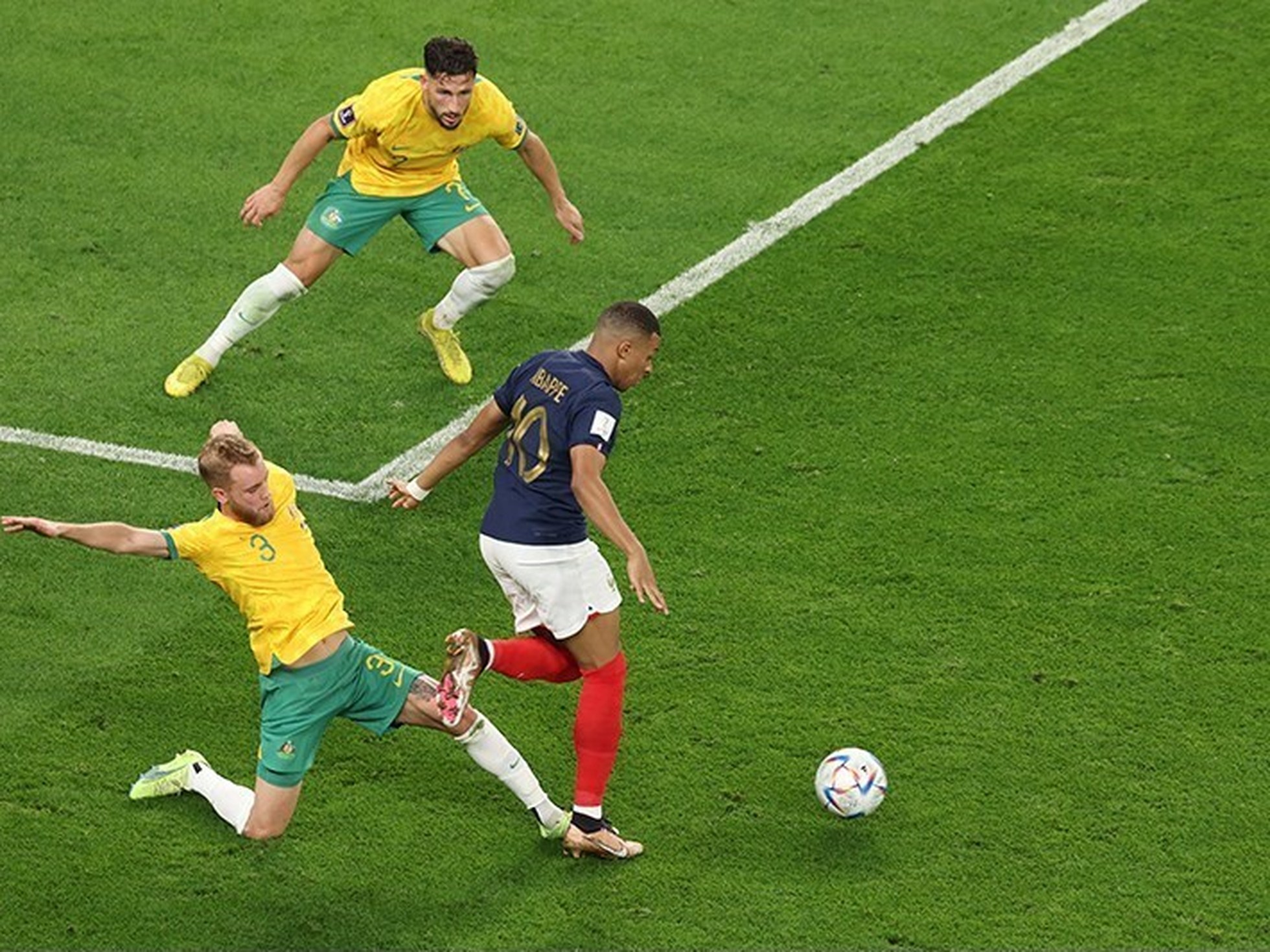 Kylian Mbappé
The point is not one superstar. It is the line behind him. Photos: site archive.
Argentina hopes. France restocks.
Argentina should not work. We have gotten so used to Argentina being great that we have stopped noticing that it makes little sense.
The US has seven times their population. Our economy is not in the same solar system. Their currency has collapsed so many times it is a national punchline. Their league is a mess: thirty clubs in the first division, a format that gets rewritten every couple of years, competitions invented and abandoned, clubs that cannot make payroll. Their biggest teams cannot hold onto their best players for more than a season or two. No Argentine club has won the Copa Libertadores since River Plate in 2018, and Brazilian clubs have won every single one since.8
They sent more than two thousand abroad in the last several years, third-most on earth, and it is not because somebody drew up a clever export strategy. They do it because they are broke. It is a fire sale that happens to run every year.9
And Argentina went into this World Cup ranked first in the world. Reigning World Cup and Copa America champions. Messi, and before him Maradona, and before him Kempes, decade after decade, on a fraction of our money, with a system that on paper is worse than ours in nearly every way you could measure it.4
So what do they have? Not passion. I am tired of hearing about passion. Passion is not a mechanism and it does not teach a nine-year-old to receive on his back foot.
What Argentina has is a machine that runs on the unpaid labor and accumulated knowledge of an entire society. Its clubs do not create the raw material. They find it, refine it and sell it.
The oil was already in the ground.
France had to drill.
The oil was already in the ground. France had to drill.
And this is the part Americans get wrong about France, because we picture Clairefontaine and we picture a lab.
France is not a soccer monoculture. It is a rich, developed, multi-sport country. It is a rugby power. It produces world-class handball, cycling, tennis, judo, and at this moment the most physically astonishing basketball player alive. French kids have options. French athletes have options. The idea that soccer just naturally swallows all the talent in a wealthy Western democracy is not true in France, and that is exactly the excuse we make for ourselves.
France was also not always this. That is the part we forget.
They finished third in 1958 and then failed to qualify for the World Cup in 1962, 1970, and 1974. They won the Euros in 1984 with Platini and one of the great midfields anyone has ever put on a field, made the semifinals in 1982 and 1986, and then it evaporated. No Euro ‘88. No World Cup in 1990. No World Cup in 1994.
When the tournament came here, when I was nine years old watching Brazil knock us out on the Fourth of July, the French were watching the same games on television from a country that had never won a World Cup in sixty-four years of trying.
Their history right up to 1998 is the history of a lot of countries: talent in bursts, long silences in between, and not much in the trophy case to show for any of it. I am not going to pretend that is our history, because France’s version of failure was still better than anything we have ever managed. They won a European Championship. They reached two World Cup semifinals. We have never done anything close to either. But it is the same disease, and we have the more advanced case of it. France at least got golden generations and could not convert them. We have never had one.10
What changed in 1998 was not that France got good. France had been good. What changed is that France stopped being intermittent.
A system does not manufacture genius. Genius is random and always will be. What a system does is guarantee supply, so that when the genius does show up there are twenty other players around him good enough to win with, and so that when he retires the next wave is already in the building. France has reached four World Cup finals in twenty-four years, first with Zidane at the center of the team and then, after nearly the entire roster turned over, twice more with Mbappé and Griezmann. Different eras, different styles, the same supply line.10
They are not on a hot streak. They are reliable. Reliability is the thing you build, and it is the only thing worth building.
The scale of it is genuinely hard to process. Of the 1,248 players at this World Cup, ninety-nine were born in France. Twenty-three of them are playing for France. The other seventy-six are playing for somebody else: thirteen for Algeria, twelve for Haiti, eleven for Congo, nine for Senegal, eight for Ivory Coast. In 2018 that number was fifty. Now it is seventy-six. Paris alone accounts for more players at this tournament than any other city on earth. A French team assembled entirely from players who did not make the squad would be worth more, at market value, than the entire roster of Argentina.11
France is not producing a national team. France is producing a surplus so large it staffs other countries’ national teams, and they still have enough left over to reach the semifinal.
To be fair, the machine is not magic. It also produced a group-stage humiliation in 2002 and an actual player mutiny in 2010. Supply is not the same thing as results. But nobody in France has spent the last thirty years wondering where the players are going to come from, and that is a problem we have never once solved.
Now, nobody in American soccer has ever proposed that we become Argentina. Nobody would say that out loud. It would sound insane.
But much of what we do say out loud is secretly an Argentina plan.
Listen to how we talk about fixing this. Soccer is growing. Participation is up. Ratings are up. MLS adds teams every year. Kids watch the Premier League on Saturday mornings now, and they wear Real Madrid kits to school, and the sport is finally becoming part of the culture. Give it another generation and it will be woven all the way in, and once that happens the players will simply appear, the way they appear in Buenos Aires.
That is the theory. That is what people mean when they say yet. It is a bet that America will eventually love soccer enough that greatness happens on its own.
That bet cannot pay. That is not something you can simply manufacture.
When I say Argentina has soccer culture, I am not describing enthusiasm. Enthusiasm we can get. We may already have it. I am describing a hundred years of accumulated, distributed, unpaid expertise, sitting in every neighborhood, in every family, on every corner, doing work that no institution has to pay for or organize or even know about. That is infrastructure, and it happens to be made out of people.
We are never going to be Argentina, and not because we are lazy or worse or less passionate. There is no procedure. There is no sequence of decisions, no budget line, no federation initiative that produces grandfathers in Cleveland who can teach a five-year-old how to open his body before the ball arrives. You cannot pass a resolution that makes a hundred years of accumulated knowledge appear in a neighborhood. That ideal is not a strategy. It is an accident that has been compounding since before the First World War.
Which leaves France, and here is the part that is not readily apparent.
France’s system did not conjure soccer culture out of nothing. France has street football, and not just metaphorically. It is Bondy and Roissy-en-Brie and La Castellane in Marseille, the caged concrete pitches in the housing estates where the game is free and constant and merciless, where older kids play against younger ones and space is tight and weakness gets exposed inside of thirty seconds. Zidane came out of that. Mbappé came out of that. Pogba, Saliba, on and on. The banlieues are France’s potrero, and everybody in French soccer knows it.
The French machine is not a substitute for culture. It is a machine that was deliberately pointed at the culture that was already there.
That is the sentence I would tattoo on the federation’s forehead. In France, the poor immigrant neighborhood is where the scouts go first.
In America, it is where the scouting network stops.
Because we have those neighborhoods. We have soccer cultures in this country, plural, and they are thriving, and they are almost entirely invisible to the people who run this sport. They exist in Latino Los Angeles and Houston and Chicago, in immigrant communities in Queens and northern Virginia and Minneapolis, in Sunday adult leagues and indoor leagues and church leagues and unaffiliated tournaments that never once touch the official American pyramid. Kids in those places are playing constantly, for free, with knowledgeable adults watching. The oil is in the ground here too.
We have simply never gone looking for it.
And if you want proof of how badly we have failed at this, look at the team we just watched lose. Our best player at this World Cup was Folarin Balogun, born in New York, raised in England and developed by Arsenal. Our breakout star was Malik Tillman, raised in Germany and developed by Bayern Munich. Antonee Robinson was born and raised in England and came through Everton. Sergiño Dest came out of Ajax. Weston McKennie first learned the game as a kid living in Germany.
We did not develop those players. Other countries’ systems did, and we collected them on a technicality of birth or blood. We are doing to Europe what Algeria and Haiti and Senegal are doing to France, and we are not embarrassed about it, and maybe we should be.
The difference is that France is also running a factory.12
Which brings us, inevitably, to the thing Americans say instead of thinking about any of this. It shows up within ninety seconds of the conversation starting, every single time, and it has been said to me by roughly a hundred people since Belgium.
“If only our best athletes played soccer.”
“Imagine if LeBron had chosen soccer instead of basketball.”
If only our best athletes played soccer. Imagine if LeBron had chosen soccer instead of basketball.
03The Excuse
My brother-in-law said it to me in the kitchen, somewhere around the seventy-fifth minute, while the game was still technically alive and he was getting another beer. He was not being cruel. He thought he was being helpful. He had watched roughly an hour of professional soccer in his adult life and had arrived, entirely on his own, at the same theory every American arrives at.
Imagine if LeBron had played soccer.
It isn’t always LeBron. Sometimes it is Lamar Jackson. Sometimes it is Randy Moss. Years ago, my friends and I built an entire back four out of NFL cornerbacks. The name changes and the sentence never does, and neither does the tone, because it is not offered as a question. It is offered as a diagnosis, with the calm of a man explaining why the restaurant on that corner keeps closing. Bad location. Nothing anybody can do.
I have been hearing this my whole life and I have never once heard anyone follow it with how that actually works.
Let me be fair to it before I take it apart, because there is a real idea buried inside it, and because I have made the soft version of this argument myself. Probably in 2006. Definitely in 1998. We do lose kids. Somewhere in Georgia right now there is a thirteen-year-old with absurd acceleration and freakish body control, and the adults circling him are football coaches, because football is where the attention is, and the scholarship, and the Friday night lights, and the version of his future that his uncle can picture. Nobody is lying to him. In this country that is the rational choice, and some of those kids would have been very good at soccer, and we will never know which ones. That is a real cost and I am not going to pretend it is zero.
But watch what happens the moment you ask what is meant by “athlete”.
Because we mean something specific by that word in America. We mean tall. We mean fast in a straight line over forty yards. We mean explosive off one foot, thick through the shoulders, capable of doing something at a combine that makes a stopwatch look broken. That is the American athletic ideal and we have been marinating in it since birth.
Inter Miami lists Lionel Messi at five foot seven, one hundred forty-eight pounds.13
He would be the smallest non-kicker in an NFL locker room by roughly fifty pounds. He would not have been the best athlete on my high school’s basketball team. He is also the greatest soccer player of his generation and probably of all time.
And Messi is not a freak exception. He is the top of a much longer list.
Xavi and Iniesta, who between them ran world soccer for the better part of a decade, are both five foot seven. Luka Modrić is a shade under five foot nine. Pedri is a spindly five foot nine. Maradona was five foot five.
That is not a collection of curiosities. That is a Ballon d’Or, four Champions Leagues, two World Cups and most of the last twenty years of the sport, assembled almost entirely out of players an American scout would have walked past on the way to somebody taller, stronger or faster.
I am not making the tired point that soccer is a small man’s game. It plainly is not. Haaland is six foot four. Lukaku destroyed Chris Richards for the fourth goal on Sunday and looked like a tank doing it. The point is narrower and it matters more: the athleticism soccer selects for is not the athleticism our sports culture is built to notice. Balance through contact. Deceleration, the ability to change direction inside a phone booth with a defender’s studs on your ankle. Scanning, which means knowing where four people are before the ball arrives, which means having looked, which means having been taught to look. Disguise. Composure at speed. Technical precision in the ninetieth minute when your legs are gone. Most of that lives in your eyes and your head and the soles of your feet, and not one bit of it shows up on a stopwatch.
Which is why the LeBron counterfactual is broken at the root, and not for the reason people expect.
The question people are really asking is: what if LeBron, at fifteen, with all of that raw material, had chosen soccer instead. And the answer is that he would have been a fifteen-year-old with magnificent hips and a first touch like a folding chair. Elite technique is not a jacket you put on over generic athletic ability. It is a motor and perceptual skill built out of ten thousand unglamorous hours starting somewhere around age four, and no amount of vertical leap gets you out of paying that bill.
The counterfactual that would actually change anything is not LeBron at fifteen. It is LeBron at four. And if that is the question you are asking, then congratulations, you are not talking about athlete allocation anymore. You are talking about what a four-year-old in Akron is surrounded by, and who is watching him, and whether the sport is even in the room.
But here is where the excuse stops being merely wrong and becomes backwards, and this is the part I cannot get past.
Picture the kid this country throws away. You know him. You went to school with him. He is the quickest kid in the building and he has been the best player in every gym he has ever walked into, and then somewhere around thirteen the adults start doing math on him. He is five foot nothing and will never be bigger than five foot eight. In basketball that is a junior varsity ceiling and everyone in the building can see it by sophomore year, including him. In football he is a very fast child standing on a field with two-hundred-pound safeties. They tell him he is small, and in the sports this country actually cares about, small is not a description. It is a diagnosis.

I was not THAT kid, and I want to be careful here, because nothing on earth is less interesting than a middle-aged man explaining that he could have been a player. I could not have been a player. But I was small, and I was young for my grade, and I showed up to high school tryouts as a thirteen-year-old freshman standing next to boys who were already shaving. So I know exactly what got measured that week, because I watched it get measured. They ran us. They looked at us. Then they ran us some more. Nobody checked whether any of us could see a pass before the ball arrived, or find the right spot to be for a loose ball on a rebound. It would not have occurred to anyone to look, and I do not think the men doing the selecting could have told you what they were looking for beyond the thing they could see from thirty yards away or measure on their stopwatch.
So that kid plays JV. Or he quits. Or he hangs on long enough to become the best guy at the Thursday night pickup game, and that is where the story ends.
That body is the greatest soccer player who has ever lived.
There are millions of him. Soccer is the one sport we have that offers a path to the very top of the world for precisely the athlete many other American sports discard at puberty, and it is not a consolation path, it is the actual summit, and we have built a system that would not recognize him if he walked straight into it.
So stop asking where our LeBron is. Ask where our Modrić is. Our Iniesta. Our Pedri. Our Xavi. Where are the five-foot-eight geniuses that a country of three hundred and forty million people has to be producing right now, this year.
They exist.
We already discussed how France is not a sports monoculture. So why don’t they have the same excuse? The excuse requires you to believe that a country’s best athletes are a fixed quantity, allocated once, and that whoever wins the allocation wins the sport.
France loses plenty of athletes to other sports, as well as dozens of finished soccer players to other nations. Yet it still sits at the top tier of elite soccer powers. France does not need all of its best “athletes”. It needs enough of the right ones, early, inside a system that knows what to do with them.
And then there is the population argument, which is the same excuse in a different disguise.
Uruguay has about three and a half million people. That is Connecticut. Uruguay has won two World Cups and reached a semifinal in 2010. Croatia has fewer people than metropolitan Chicago and finished third in 1998, second in 2018 and third in 2022. That’s three top-three finishes in six tournaments. Meanwhile China has one and a half billion people and was ranked ninety-first in the world going into this tournament.
When researchers have actually run the numbers on this, population by itself does not predict anything. It only starts to matter when you multiply it by how seriously a country plays the sport. Three hundred and forty million people are not a talent pool. They are a census.
The talent pool is the number of children who play seriously enough, early enough, to develop real skill. Who are coached by somebody capable of recognizing what he is looking at. Who are seen. Who can still afford it at thirteen. Who are still in the sport at sixteen. Argentina has forty-six million people and an enormous effective soccer population. We have three hundred and forty million people and a much smaller one. That is the arithmetic that actually governs this, and no amount of raw census data gets you out of it.14
But the country that should end this argument permanently is the one directly south of us.15
FIFA’s own survey of the global game counted 9,464 professional male players in Mexico and 244 professional clubs. Both are the highest figures in the world. Not the highest in the region. The highest anywhere. More professional soccer players than Brazil, more professional clubs than Germany, an entire nation of a hundred and thirty million people where the sport is unquestionably, overwhelmingly, culturally first, and where a boy who is good at it is treated like a boy who is good at it.16
Mexico has never reached a World Cup semifinal. They have been to the quarterfinal twice, in 1970 and 1986, both times as the host.16
Mexico is the Argentina argument running along our southern border. The game is first there, the knowledge is everywhere, the kid who can play is watched by adults who know exactly what they are looking at, and the result is professionals by the thousand. Cultural saturation is extraordinarily good at manufacturing volume.
What it does not do, by itself, is manufacture the top end.
Somewhere between the nine-thousandth professional and the one who wins you a World Cup, something has to happen, and in Mexico it mostly does not. That is a real question with a real answer, and the answer is not the one Americans reach for. It has to do with what happens to a Mexican eighteen-year-old after somebody notices him. Where he plays. Who he plays against every single week. Whether the club holding his contract is trying to develop him or trying to survive the season, and how many of the minutes he needs are going to an imported thirty-year-old instead. I am going to spend real time on that later, because it is our problem too, and because it is the part of this that is actually fixable. Volume gets you into the room. Something else entirely gets you a Messi.
But there is a part of the Mexico comparison that Americans rarely grasp, because we stop at “they love it more than we do” and pocket that as one more thing that is not our fault.
Mexico’s talent pool is homogeneous. Ours is not.
Ours contains an enormous piece of Mexico’s, and then Guatemala and El Salvador and Honduras, and then Haiti and Jamaica and Trinidad, and then Nigeria and Ghana and Liberia, and then Bosnia and Ukraine and Somalia, and every family that has arrived here in the last half century from a country where the first thing a child touches is a ball. We are the single most demographically fortunate soccer nation on earth and it is not close. France built a world power by aiming its machine at precisely this kind of population, and France has a fraction of what we are sitting on.
The excuse says our pool is the problem. Our pool is a winning lottery ticket we have never cashed.
On September 1, 2001, I went to a World Cup qualifier at RFK Stadium, United States against Honduras. It kicked off at ten in the morning on a Saturday, because it was the opening weekend of college football and every decent television window in the country was already spoken for. Fifty-four thousand people came anyway. Almost all rooting for Honduras.
The upper decks were blue. At some point, after a goal, somebody up there started dropping water balloons full of blue paint into the seats below us, and I remember standing in a stadium two miles from the Capitol thinking I had never been in an American building where anybody cared this much about anything.
The AP wrote the next morning that RFK looked like it had been taken over by a Central American country. Honduras won 3-2, the first home qualifying loss the United States had suffered since 1985. Bruce Arena, afterward: “Only in America, I guess. We’re fighting for a home-field advantage.”
Thirteen years later I was in Recife for the World Cup and could not get a table anywhere because Mexico’s fans had taken every bar in the neighborhood. When we finally sat down and started talking to them, most of them were from the United States.
That is the pool. It has been standing in front of us, in our own stadiums, singing, for twenty-five years.17
That’s not to say the players are all out there already, fully formed, waiting on a field behind a strip mall for somebody to finally show up with a clipboard. Some of them are, and that is a failure, but there are also American neighborhoods where the game is not just overlooked, it is absent. No club. No suitable field. No coach, no league, no adult in the building who understands the game. In those places the work is not scouting. It is construction. It is slower, it costs more, and it is the least glamorous line item a federation will ever be asked to fund.
Both things have to happen. We are currently doing neither with any seriousness.
Which brings me to an important number.
SFIA put outdoor soccer participation in the United States at 16.8 million people in 2025, up almost sixteen percent in a single year, with another 6.6 million playing indoors. During this World Cup their survey work had roughly 25 million Americans playing some version of the game.
So why does the excuse survive? Why is it the first thing out of everyone’s mouth, every four years, without fail?
Because it is comfortable, and because of what it protects.
It is an excuse shaped exactly like an explanation, and it puts the failure somewhere that requires nothing of anybody. But it also quietly preserves the ranking we actually care about. America still has the greatest athletes in the world. The soccer countries are merely cashing in on our disinterest. We are not losing to them. We are abstaining. That is a very expensive thing to believe, and we have been buying it for thirty years, because the alternative is admitting that the people who run this sport in this country have had every resource on earth and have not done the job.
If the reason we are not good is that Patrick Mahomes plays quarterback, then the plan is: nothing. Wait. Hope the culture arrives some day.
Here is what is actually true.
Yes, we do lose some great athletes to football, basketball, baseball, lacrosse, hockey or tennis. Some of them have the perfect physical traits for soccer, but many of them do not. Some of them were never exposed to soccer or came to the game too late for it to matter.
However, the more disappointing truth is that many of the kids we needed did not go play football. Many of them never had that choice, because they weren’t built for that sport. They played soccer. They are playing it right now, this afternoon, on a beaten field behind a strip mall in Houston or on a concrete lot in Queens or in a church league in Los Angeles that has been running for twenty years and has never once been visited by anyone employed in professional American soccer. Around seven in ten of them will be out of organized sports by the time they are thirteen, and nobody in this sport will ever have learned their names, and it will not be because the NFL took them.19
That is not a best athlete problem.
And once you accept that the players are here, you are left with the actual question, the one this whole thing has been driving at since the moment the fourth goal went in. If the raw material is not the constraint, what is?
There are two answers to that. One of them is a wall, and I have to be honest with you about it before I try to sell you anything else.
04What Can't Be Built
The wall goes up before anybody in American soccer is allowed near the problem.
Whatever we build, we build for kids who are already in the building. Academies want you at thirteen or fourteen. Scouts show up when there is something worth driving to see. MLS Next, the youth national teams, the federation’s whole apparatus, all of it switches on at an age when the decisive thing has either already happened to a child or it has not. By the time an institution in this country puts its hands on a player, the most important stretch of his development is a decade behind him, and nobody employed in professional soccer watched a minute of it.
That decade is what I mean by culture. Not flags. Not tifo, not singing, not whether a guy in Baltimore can stream every game in the Bundesliga or name the Ligue 1 table. I mean the thousands of hours of unsupervised, unfunded, uncoached, unrecorded work a child does before anyone official knows his name.
And I want to describe what that actually is, because Americans romanticize it and then dismiss it, which is a neat trick.
Go find fifteen minutes of Argentine baby fútbol on YouTube. I am serious. Do it before you read another word of this, because I cannot make you believe what I am about to tell you.
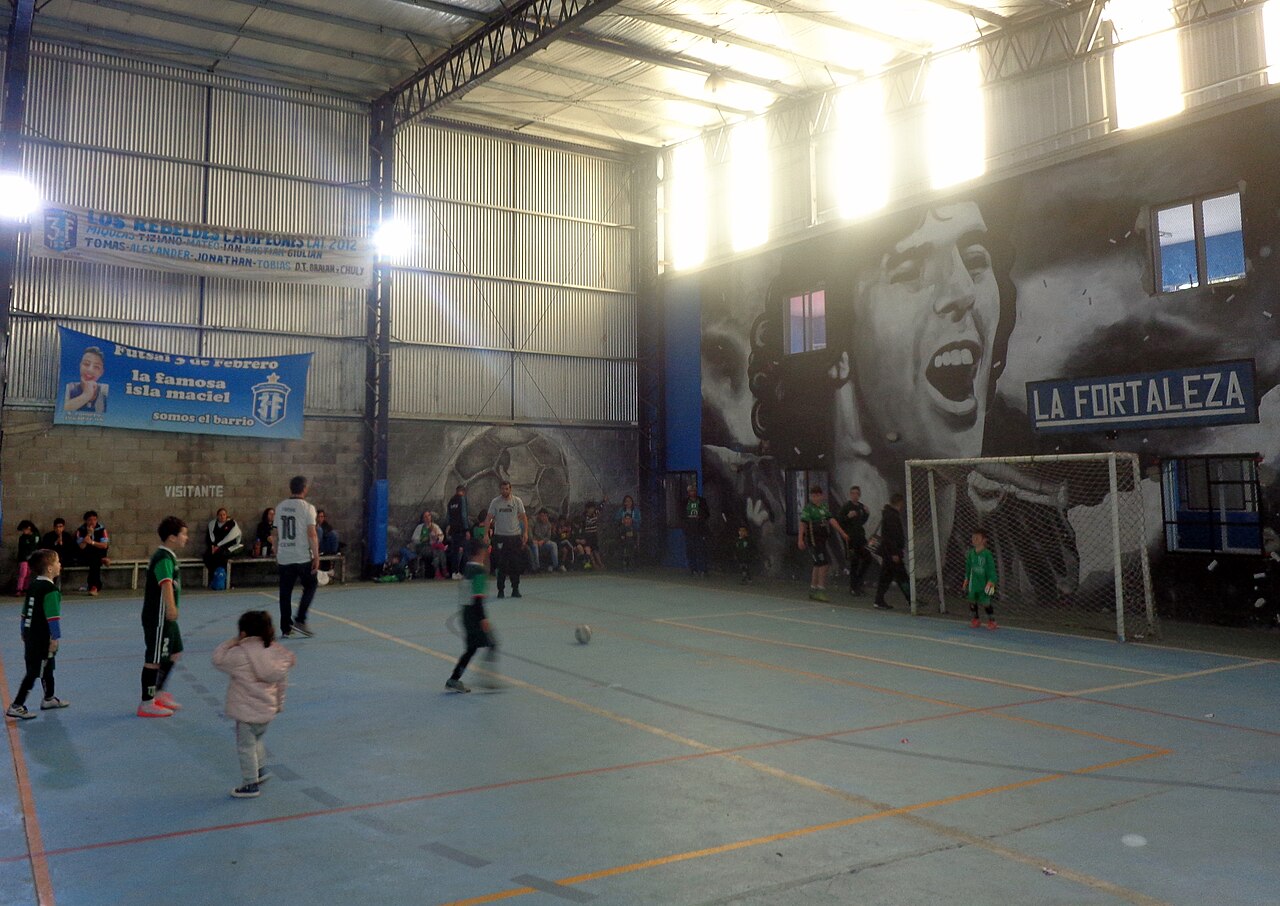
You will see five-year-olds. Actual five-year-olds, in real kits with real numbers, playing on a hard court about the size of a basketball floor, and it is not a clinic. There is a referee. There is a scoreboard. There is a league table and everybody knows where their club sits in it. The parents are not sitting in folding chairs behind a cooler. They are standing on the touchline three deep and they are screaming, and not the encouraging kind. Somebody’s father has an opinion about a substitution. Somebody’s uncle is arguing with the referee, who is nineteen. The kids are diving into tackles they are not big enough to make. Somebody is crying, and nobody is going over.
This is the thing Americans get most wrong about Argentina, and I got it wrong for twenty years. We picture the street, the barefoot kids, the ball made of tape, the beautiful unstructured chaos, and then we file it under charming poverty and move on. The street is real, and I will get back to it. But underneath the street there is an entire organized competitive pyramid running in parallel, starting before kindergarten, and it is deadly serious, and the seriousness is the whole point.
By eight, a good one is being watched. Not by a parent with a clipboard app. By a captador, a spotter from a real club, who came to a baby fútbol match on a Saturday because that is where the players are and because everyone has always known that is where the players are. By ten or eleven there may be a man attached to the family who calls himself a representative. By thirteen a kid can be living away from home in a club’s residence, eating club food, with the whole thing already understood as a career, because in that house it might be the career, the only one anybody has been offered, and everyone in the kitchen knows it.
Soccer in that context is not a hobby or merely a childhood enrichment activity. It is the visible, believable, statistically absurd but locally verified exit. Everybody in the neighborhood knows somebody who got out, or knows somebody who knows him, or watched the kid two streets over sign at fourteen and buy his mother a house at nineteen. The lottery ticket is real because you have met the winner. So a nine-year-old in Rosario is not playing for a participation trophy and he is not playing for the love of it, or not only for the love of it. He is playing under conditions where losing his man at the back post gets him screamed at by four adults who are not his coach, where the boy across from him needs this more than he does, where the club can cut him, where the man who came to watch him might not come back, and where his own father is standing on the touchline wearing an expression that has nothing whatsoever to do with fun.
Now go back to the street, because the street is what that pyramid is standing on.
Take the potrero seriously as a piece of equipment. A hard surface, usually a bad one. A space far too small for the number of bodies in it. No referee, so fouls do not stop anything and complaining is worse than useless. No coach, so nobody freezes the play to explain the concept. Older kids, which is the entire engine of the thing, because a nine-year-old playing against thirteen-year-olds is not being nurtured, he is being hunted. The ball comes to him with a bigger kid already arriving. He has about a third of a second. If he takes his touch into pressure he loses it, and if he loses it he does not get it back for a long time, and everyone sees. So he learns to look before it arrives. Nobody teaches him to look. The environment charges him a fee every time he does not, and he pays it a few hundred times, and then he looks.
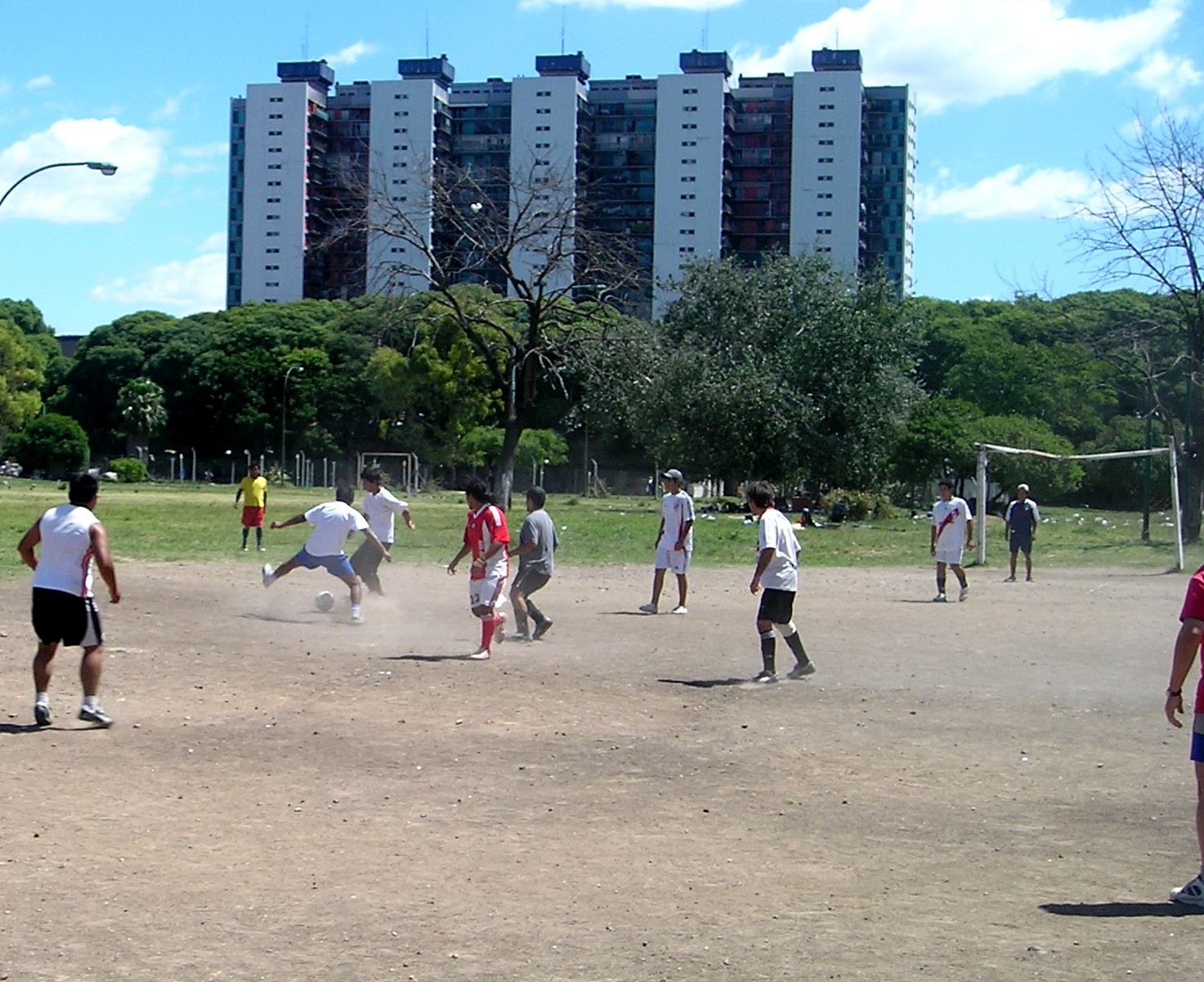
Scanning. Deception. A first touch that moves the ball into space that does not exist yet. Playing off a surface that lies to you. The habit of solving a problem instead of executing an instruction. These are not mystical South American virtues. They are the predictable output of a specific training environment, and the environment is free, and it runs seven days a week, and the child does not experience one second of it as work.
It is tempting to romanticize it all, but the desperation is not beautiful. There are twelve-year-olds in that system being hustled by grown men, thirteen-year-olds shipped across a country, and thousands upon thousands of boys who give the sport their entire childhood and get nothing at all. It is a brutal, wasteful, unregulated machine that grinds up nearly everyone it touches. It also produces the best players on earth, and it produces them without a budget, and nobody planned it. That is the honest version. It is not a model. It is a condition.
Here is the part I did not expect, and the part that should end the argument that this is all just Latin American mysticism.
Researchers went back and reconstructed the childhoods of German professionals, players who came up inside the most organized, best-funded, most rigorously credentialed development system in Europe. What they found is that the ones who made it had not separated themselves by accumulating more coaching. Through roughly age fourteen, the future professionals had piled up more unorganized, self-directed soccer than organized practice. Up to about age ten they were getting somewhere in the neighborhood of two coached hours a week.
Two hours. In Germany.
The coaching mattered, obviously. Nobody is arguing that a country can produce a Champions League midfielder out of pickup games alone. The point is what the coaching was sitting on top of. The academy was doing the finishing. Something else had already done the construction, and that something else was not on anyone’s schedule and nobody billed for it and no federation could have told you it was happening.20
Which brings us to the American version, and you already know it, because most of us have either lived it or driven to it.
The season begins with a registration fee and a link to a waiver. There is a background-checked coach, they are often quite good, almost always well-meaning. They may have taken a course, have a session plan, and probably know more about teaching six-year-olds than anybody in my father’s generation. Practice is an hour, once or twice a week, at a field ten or twenty minutes from the house. Twenty-two kids, one ball each if you are lucky. Some of the hour is warmup, which at that age is crowd control. Some of it is a drill where they stand in a line and wait for a turn. The good part is the scrimmage at the end, and the good part is twenty minutes long, on a field big enough that a fair amount of the twenty minutes gets spent running toward the ball rather than touching it.
Then it ends, and the ball goes in the garage, and it stays in the garage until the weekend, when an adult takes it out and drives the kid back.
I will not pretend to be a neutral witness here. I coach. I know every word of what I just wrote, and I fight it, and my sessions are built around touches, and I have absolutely stood on a field arguing that we do not need to line anybody up for anything. It does not matter. I am buying my kids a few hundred extra touches inside an hour that is still an hour, on a Tuesday that still ends, after which the ball still goes back in the garage. The best coach in America, working with total freedom and unlimited resources, cannot manufacture Wednesday. In Rosario, Wednesday belongs to the kid. Here it belongs to school and screens and the fact that the ball lives in a bag in the trunk of a car.
The problem begins outside the hours any coach controls.
And there is a finding buried in the research that ought to make every American reading this uncomfortable.
Economists have gone looking for a first-mover advantage in team sports, the same way you would look for one in an industry, and they found it. Take the year a country’s national football association was founded, and use nothing else, and you can predict where that country sits in the world rankings a century later. It outperforms GDP per capita. It outperforms population. The earlier you organized, the better you are, still, now.
So look up ours. The United States Football Association was founded in 1913 and joined FIFA the following year. The modern French federation dates to 1919.
We are older than France. On the single variable that seems to predict this better than anything else, we are an early mover, and we went into this World Cup ranked seventeenth.21
Now ask why a founding date would predict anything at all. It is paperwork. The reason it works everywhere else is that it is not a cause. It is a receipt. Associations do not get founded in a vacuum. They get founded because enough people are already playing, in enough places, seriously enough, that somebody finally has to write down the rules and schedule the fixtures. The date does not tell you when a country started. It tells you the game was already in the ground.22
That is why we are the country that breaks the model. We filed first and the game never came, and then it came and we let it die, and then we filed again. Everybody else’s founding date is a hundred and ten years of compounding. Ours is a hundred and ten years of a filing cabinet.
The second piece of the wall is worse than the first, because it is invisible, and because we cannot even measure how badly we are doing it.
An Argentine kid is not just playing more. He is playing in front of people who can see. Not coaches. Adults, standing around, who have watched a hundred thousand hours of this game and know on sight the difference between a boy who is fast and a boy who is good.
The best illustration of this I know is the way Messi got on a field in the first place.
He was five, hanging around a baby fútbol game at Abanderado Grandoli, a neighborhood club in Rosario, because his older brother was playing. A team was short a player. His grandmother Celia was standing there, and she argued with the coach until he put the smallest kid on the ground into the game.23
Take that scene apart for a second, because there is an enormous amount of knowledge buried in it. She had to see something. She had to trust what she saw. She had to understand that being tiny did not disqualify him, which is not an obvious thing to understand and which most of the adults reading this would not have understood. She had to be confident enough to tell a coach he was wrong about his own lineup. And she had to care enough about a children’s game to have the argument at all.
That is not passion. What Celia had is literacy.
Argentina is full of people who can read the game. Not at a professional level, not in a way that would earn any of them a coaching license, but well enough that a child is surrounded by useful information years before anybody officially starts developing him. The country has millions of unpaid scouts, critics, teachers and hecklers, and the great advantage is not that every Argentine father is Guardiola. It is that almost none of them are starting from zero.
In America we ask the coach to do all of it.
Teach the child how to receive. Teach him where to stand. Teach him to scan. Teach him how to strike a ball. Teach him why the pass was wrong, and what the shape is supposed to look like, and what the game is supposed to look like. Then send him home to a family that loves him completely, supports him without reservation, and has no idea what any of that means.
My father coached our Cockeysville Rec travel team. He had played as a kid and he liked the game on television but he had never been anywhere near a high level of it, which made him a completely ordinary American youth coach. A decent man volunteering to run practices in a sport nobody had ever taught him.
We were also, and I did not remotely understand this at the time, freakishly lucky. Baltimore had an indoor team, the Blast, and some of those men lived in our town with sons on our team. Every so often Mike Stankovic or Emil Dragicevic would turn up at practice and show us something. Stankovic was Serbian, a six-time MISL All-Star, a Blast fixture for the better part of two decades; the club has since retired his number. Twenty years after he stood on a field in suburban Maryland teaching a group of ten-year-olds how to receive a ball, he was on the touchline at a World Cup as an assistant coach for Ghana. Dragicevic was a Croatian midfielder who came up at Dinamo Zagreb, the same club where Luka Modrić got his start.24
Those afternoons were the best coaching of my childhood and I can still see them thirty years later, which should tell you how rare they were. It is also worth noticing what they were. Every last bit of the football knowledge that landed in my hometown was made somewhere else. It arrived because a professional indoor league happened to put a franchise in Baltimore and a few Yugoslavs and an Englishman happened to buy houses in the same zip code. In Rosario, that man is not a windfall. He is the guy at the end of the block, he is there on Wednesday too, and nobody organized it and nobody remembers it, because it happens every week.
This is not a shot at American parents, because they cannot transmit knowledge nobody ever gave them. Watch what the same parent can do in a different sport. He can tell you why the safety was late getting over the top. He can tell you where the cutoff man should be on a throw from right field. He can call a bad shot before the ball has left the shooter’s hand, and he can tell his kid why it was a bad shot, and his kid will understand him. He never took a course in any of that. It arrived through television and playgrounds and his own father and his brothers and thirty years of arguments in bars and living rooms.
Then he watches his son receive a pass with the wrong foot, facing the wrong direction, under no pressure at all, and he sees nothing. Not because he is not paying attention. He is paying total attention. There is simply nothing there to see it with.
So the child gets corrected on Tuesday and Thursday between six and seven-thirty, and then the knowledge goes quiet for the rest of the week. In Argentina, the coach curates what the culture is already teaching. In America, we ask the coach to replace the culture, and three hours will not do it, and six will not do it, and no curriculum and no coach will ever be good enough, because it’s not a coaching problem. It is an arithmetic problem, and the arithmetic is not close.
So can we build it?
No, and the reason is not that Americans are lazy or that we love our own sports too much. The reason is structural, and the clearest version of it I have found comes from a book that has nothing to do with soccer.
In his book, Breakneck, Dan Wang has a framing I have not been able to put down. He argues that modern China behaves like an engineering state, run by people who look at a problem and see something to be built out of, while America has become a lawyerly society, run by people trained to define process, allocate liability and block. His book is about high-speed rail and housing and pandemic policy, and I am not going to pretend the analogy transfers to youth sports without some spillage. But it explained something about American soccer that nothing inside American soccer ever explained to me.25
Every instinct we have here is a lawyerly instinct, and each one of them is individually correct. Children should be supervised. Coaches should be background-checked. Fields should be insured. Programs should be licensed and registered and waivered and certified and accountable to somebody when a kid gets hurt. I would not repeal a single one of them, and neither would you, and neither would any parent who has read a news story in the last twenty years.
The sum of them is a machine that can only produce a program.
And in 2017 we got to watch that machine work in real time.
U.S. Soccer put a small amount of money behind a pilot called Soccer Starts at Home. The premise was almost insultingly simple. Get a ball in front of very young children, two and three years old, and teach the parents a few basic things to do with them, so that the ball is a normal object in the house long before any organized coaching begins. The man behind it, Tom Byer, was an American who had spent decades in Japan doing exactly this, and his argument was that the decisive years start at two or three rather than twelve, and that the first instructor does not need a license, because the first instructor is a parent teaching a toddler to pull a ball close instead of booting it away.
The federation gave it seventy-five thousand dollars, which in the budget of American soccer is a rounding error, and then dropped it, reportedly because coaching education could not find adequate metrics for it.26
Of course it could not. What would the metric have been? Pullbacks per three-year-old? Quarterly growth in living-room touches? Expected goals added by a mother rolling a ball across a carpet? The return on that program, if there was one, would have shown up fifteen years later in a twenty-year-old receiving under pressure without having to think about it, and nobody in that building would have been able to prove which touch, in which living room, in which year, was the one that mattered.
I want to be careful about what I am claiming here, because the temptation is to hold that story up as the road not taken. I do not believe Soccer Starts at Home was going to close the gap with Argentina, and neither did Byer, and anybody selling you a seventy-five thousand dollar shortcut to a hundred years of accumulated national knowledge is lying to you.
The story matters for a different reason. It is a controlled demonstration of the wall. A country that cannot sustain seventy-five thousand dollars of work it is unable to measure is not a country that is going to build a century of work that nobody measures at all. Everyone in that meeting behaved reasonably. The department did its job. It asked for a metric, because asking for a metric is what the job is, and the honest answer was that there would not be one for fifteen years, and there is no form for that. Nobody failed. The machine simply did what the machine does.
The thing we need is defined by the absence of everything we are good at. Its essential property is that nobody is running it. The moment an institution supplies free play, it stops being free play. It becomes a block on a schedule, at a permitted facility, supervised by a licensed adult, that somebody’s mother drove to and signed a form for.
You can build the futsal court. You should build the futsal court, and I am going to argue for it later, at length. But a court is a place where the thing might happen. It’s not the thing itself. The thing is a hundred years of a society deciding, without ever holding a meeting about it, that this is what children do with an afternoon. A lawyerly society cannot convene that. There is no line item, no working group, and nobody to sue if it fails to appear.
Which brings me to the interesting thing about this current US men’s team. The team sheet.
Christian Pulisic’s father played professional indoor soccer and coached. Gio Reyna’s father captained the national team and his mother played for the women’s team. Sebastian Berhalter’s father played in a World Cup and then coached in one. Tim Weah’s father won the Ballon d’Or. Alex Freeman’s father caught passes in a Super Bowl. Cameron Carter-Vickers’s father was a first-round NBA draft pick.27
It’s not a nepotism story. Nobody handed those kids a cap, and every one of them is a real player who earned everything he has. It’s not a genetics story either, and if you try to make it one you will end up saying something stupid, because the sons of Antonio Freeman and George Weah do not share a gene. They share a house.
What they share is that each of them was raised inside a private, household-scale reproduction of the thing an Argentine kid gets from the street for nothing. A parent who knew what he was watching. A ball that was always out. A dinner table where the game got discussed without anybody deciding to discuss it. An adult in the room who could look at a seven-year-old’s first touch and know. Argentina distributes that across forty-six million people. We have it concentrated inside about a dozen American families, and we are staffing a World Cup roster out of them.
Other countries have legacy players. Thuram, Maldini, Simeone, Chiesa. Of course they do. The difference is what the legacy is doing. In Argentina, the child of a professional has an advantage too, but the advantage is narrow, because the plumber’s son and the bus driver’s son are also surrounded by adults who can read the game. The culture lifts the floor. In America the culture does not lift anything, so knowledge inside the home functions like a private academy, and the children of the few people who have it are wildly overrepresented at the top.
That is not a heartwarming coincidence. It is a diagnostic.
I keep telling you this like it is something I read, but it is something I’ve lived as well.
Go back to that Cockeysville team, the one with the professionals dropping in on practice. The Blast’s head coach lived in our town, and his son played with us. Kenny Cooper Sr. was an English goalkeeper who had played a decade in the NASL and then won a championship coaching in Baltimore. His son, Kenny Jr., was the best player on our team by a distance.
He signed with Manchester United at eighteen, played many years in MLS and appeared ten times for the USMNT.
Now hold the two things next to each other, because this is as close to an experiment as American youth soccer is ever going to hand anybody. We all got the same field. We all got the same drills, run by the same volunteer dad. We all got Stankovic and Dragicevic on the odd Tuesday, which is more elite instruction than ninety-nine percent of American children received in 1992. One other boy from that team went on to play professionally in the lower divisions in Europe, which for a suburban Maryland travel team is a statistical absurdity and which I suspect is not a coincidence either.
And the one who went the furthest, by a mile, was the one who went home to a former professional every night.28
 Mike Stankovic
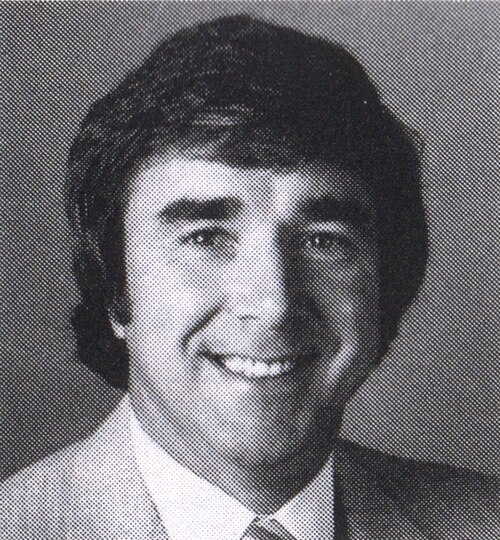 Kenny Cooper Sr.
Knowledge, imported. A star defender and a championship coach helped make elite soccer expertise an ordinary part of childhood in one corner of Baltimore County. Portraits: 1984–85 MISL media guide / Wikimedia Commons (Stankovic, Cooper).
I am not claiming our town produced him. Dallas and Manchester finished him, and he had things the rest of us did not have and were never going to have. The best coaching available anywhere near me, in the most soccer-literate square mile in the state of Maryland, was still not the variable. The variable was the house. And it was already the variable in 1992, thirty years before anybody looked at this World Cup roster and noticed the same thing.
Right now, there is only one other way through, which I showed you already. Be raised somewhere else. Balogun in London. Tillman in Nuremberg. Robinson in Liverpool. Dest in Almere.
Run the two lists together and stare at them. There are essentially two reliable ways for an American boy to acquire the childhood that produces an international footballer. Be raised outside the United States. Or be raised inside a household that manufactured that childhood privately, because it happened to contain the rare and specific expertise to know how.
Both are workarounds. Neither is a system. A country of three hundred and forty million people is fielding a national team assembled out of expatriates and inheritances, and calling the result a talent pool.
The roster is not a measure of what we produce. It is a readout of what we do not have, and it is the most precise instrument we own.
That is the wall, and it is not coming down. The Argentine five-year-old is standing in the middle of the sport. The American five-year-old only touches a soccer ball when an adult schedules it.
One thing before I turn the corner, though, because I have just spent several thousand words telling you what cannot be built, and I do not want you to draw the wrong conclusion from it.
France does not have what Argentina has either. Not nationally, not across the whole country, not remotely at that scale.
What France did was stop trying to build it.
05The Way Through
Notes & sources
- Match figures are from The World Cup Guide's instant reaction to USA–Belgium, using the match data available at publication. ↩
- FIFA confirmed the 2026 final for July 19 at New York New Jersey Stadium (MetLife): FIFA, tournament final announcement. ↩
- Tournament-by-tournament U.S. results and the 1994 loss to Brazil: FIFA, United States team profile and World Cup history. ↩
- Pre-tournament positions come from the June 2026 FIFA men's ranking table: FIFA rankings, June 2026 (PDF hosted by The FA). ↩
- The crowd estimate, halted bus route and helicopter evacuation were reported from Buenos Aires: Reuters, Argentina victory parade. ↩
- Match sequence and Mbappé's hat trick: FIFA, 2022 World Cup tournament review. ↩
- Argentina's titles, finals and 36-year wait between 1986 and 2022: FIFA, Argentina team profile and World Cup history. ↩
- River Plate won the 2018 Libertadores; the champions since have all been Brazilian clubs: CONMEBOL, Libertadores champions. ↩
- CIES counted 2,171 Argentine expatriate footballers, behind Brazil (3,020) and France (2,293): CIES Football Observatory Weekly Post 505, May 2025. ↩
- France's tournament record, including the missed World Cups and four finals through 2022: FIFA, France team profile and World Cup history. ↩
- Opta's 2026 birthplace analysis counted 99 France-born players—23 for France and 76 for other teams—and traced 54 to Île-de-France: L'Équipe. Pre-tournament roster estimates put France at €1.53 billion and Argentina at €818.5 million: SportingPedia's Transfermarkt-based comparison. ↩
- Birthplaces and development paths are listed in U.S. Soccer's official 2026 World Cup roster notes and player biographies. ↩
- Inter Miami lists Messi at 5'7" and 148 pounds: Inter Miami CF, Lionel Messi player profile. ↩
- World Cup records and population context: FIFA on Uruguay and FIFA on Croatia. China's June 2026 position is in the ranking table cited in note 4. ↩
- A recent cross-country analysis finds population and GDP far weaker than football-specific history and experience: “What Predicts World Cup Success?”, SSRN working paper, May 2026. ↩
- FIFA's 2023 professional football report counted 9,464 male professionals and 244 professional clubs in Mexico: FIFA, Professional Football Report 2023. World Cup finishes are from FIFA's tournament archive. ↩
- The 10 a.m. kickoff, college-football television constraint, 54,032 crowd, 3–2 result and end of the United States' 16-year home qualifying streak are documented by Michael Lewis. The Washington Post documented the overwhelmingly pro-Honduran atmosphere and Bruce Arena's reaction; SoccerWire's oral history preserves the Associated Press description of RFK as having been taken over by a Central American country. ↩
- Participation estimates: SFIA, 2025 soccer participation report and SFIA, June 2026 World Cup survey. ↩
- The American Academy of Pediatrics reports that roughly 70% of children drop out of organized sports by age 13: AAP, “Sports Specialization and Intensive Training in Young Athletes”. ↩
- The retrospective German study found more childhood peer-led play among later professionals and about two hours per week of organized practice through age ten: Hornig, Aust and Güllich, European Journal of Sport Science. ↩
- On federation age and persistent first-mover advantage: Daumann et al., “The early bird catches the worm,” Managerial and Decision Economics (2023). ↩
- Founding dates: U.S. Soccer history timeline and French Football Federation history. ↩
- Messi's first game at Grandoli and his grandmother Celia's insistence are recounted in Associated Press, “Where Messi's story began”. ↩
- The Baltimore Blast identifies Stankovic as a six-time MISL All-Star and a member of its championship team; the Ghana Football Association documents his later return to the Black Stars staff, and Modern Ghana records his role as Milovan Rajevac's assistant at the 2010 World Cup. GNK Dinamo's historical archive documents Emil Dragičević's years at the club and its 1982 league and 1983 cup-winning era. ↩
- Dan Wang, Breakneck: China's Quest to Engineer the Future (Penguin, 2025). ↩
- Grant Wahl reported the $75,000 U.S. Soccer pilot and the dispute over metrics: Sports Illustrated, “Tom Byer, U.S. Soccer and Soccer Starts at Home” (2018). ↩
- Family backgrounds are documented in official U.S. Soccer player biographies and its 2026 feature “A Friends and Family Atmosphere”. ↩
- The Indoor Soccer Hall of Fame recounts Kenny Cooper Sr.'s championship run with the Baltimore Blast. Kenny Cooper Jr.'s official biography traces his path to Manchester United and a twelve-year professional career; his ten U.S. appearances are recorded by National Football Teams. ↩
Photography & licensing
Buenos Aires celebration: Gobierno de la Ciudad Autónoma de Buenos Aires, CC BY 2.5 AR. Dock Sud baby fútbol: Roberto Fiadone, CC BY-SA 4.0. Buenos Aires potrero: Roblespepe, CC BY-SA 4.0. Informal park game: Simone Franchina, Unsplash License. Baltimore Blast portraits: Major Indoor Soccer League, 1984–85 media guide, public domain.
Player imagery in the opening and France triptych is drawn from The World Cup Guide site archive.