Why the USMNT Will Never Be Argentina (But Could Maybe Be France)
France did not inherit a soccer culture like Argentina’s. It built the machinery to find talent, develop it and wait for the harvest. Here is what America could build—and why it still has not.
01The French Model
Anyone who knows the mythology of French soccer knows Clairefontaine.
It is the postcard. The château in the forest an hour southwest of Paris, the manicured pitches, the boys in matching kit filmed in slow motion, the place the 1998 team stayed while it won the World Cup. It is what American commentators point out to show that France did something deliberate. It is where the machine lives.
Clairefontaine takes twenty-three boys a year.
Thirteen to fifteen years old, boarding Monday through Friday, back to their own clubs on the weekend to play their own matches, and they have to live in Île-de-France to be eligible in the first place. It is not a national academy. It is a regional one, and it is small, and if you tried to explain the French national team by adding up the boys who have gone through Clairefontaine you would run out of players before you finished the back four.1
So the postcard is a decoy. It is a real thing that does real work and it is nowhere close to the answer.
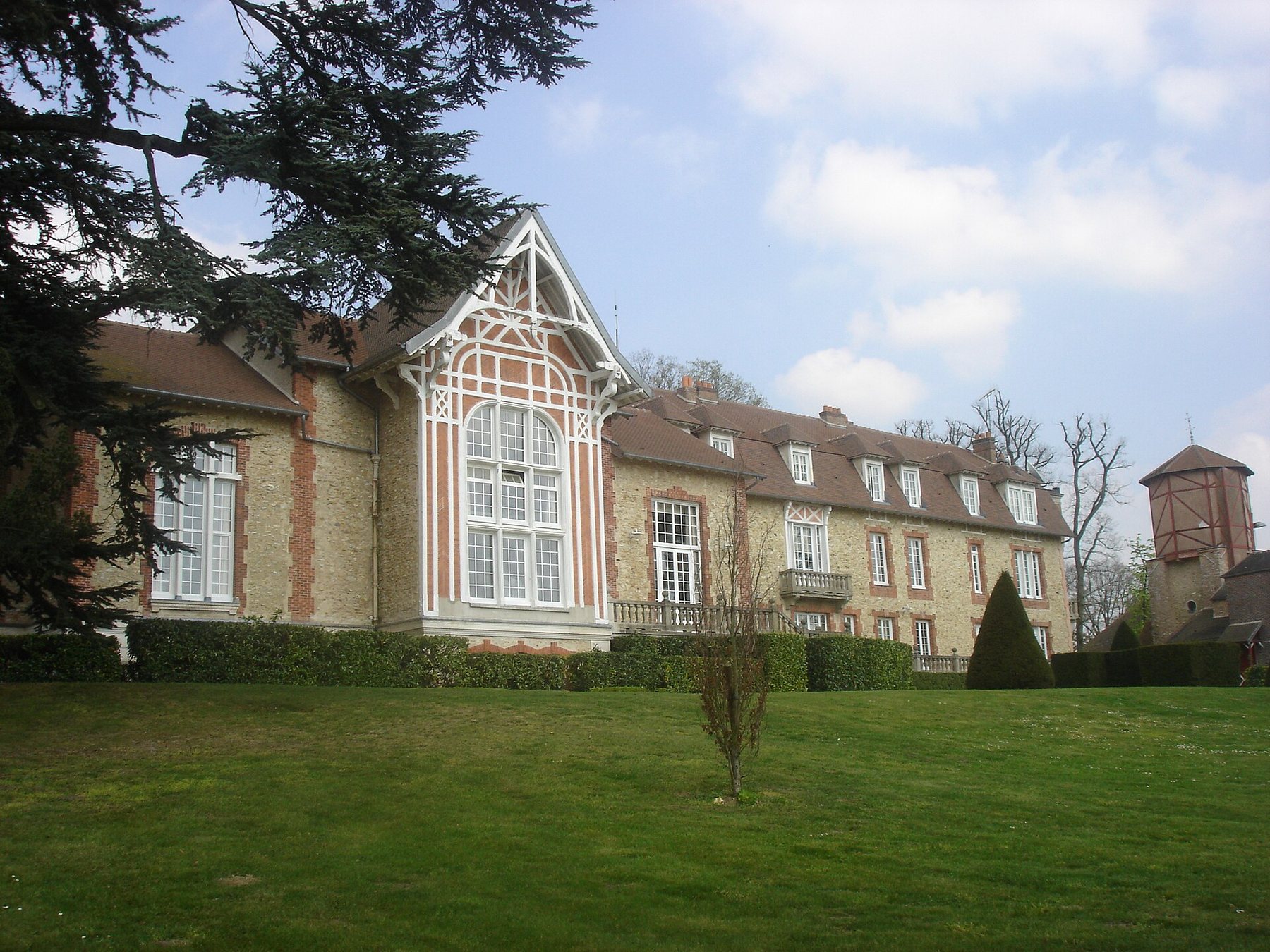
The answer is duller, and it is bigger, and every single piece of it is something you could put in a budget.
Start with the law, because France started with the law.
In France, a professional club does not choose whether to develop players. If you are in Ligue 1, you run an academy. Not a youth program, not a partnership with a local club, not an affiliate arrangement with a logo on a jersey. An academy, a centre de formation, and it has to operate under a state-approved specification. Its approval can be withdrawn if it stops meeting those standards, and the federation evaluates its work every season. The obligation to educate the kid, in school, not just on a field, is written into the sports code as a shared responsibility of the federation and the state.2
Try to imagine that in an American context. The Department of the Interior does not certify the Dallas Cowboys’ youth pipeline, because the Dallas Cowboys do not have one, because why on earth would they.
That is the difference between an ambition and a condition of existence.
And then, having required the academies, France takes the requisite next step, which is that it grades them on the right variable.
For the 2024–25 season the federation evaluated the academies of thirty-three professional clubs, all eighteen Ligue 1 sides plus eleven from Ligue 2 and a handful from the third tier. It did not rank them on their facilities. It did not rank them on how many under-15 tournaments they won. It ranked them on how many players signed professional contracts, how many minutes academy graduates played for the first team, how many reached national teams, how many completed their schooling and how many appeared in Europe’s five biggest leagues.3
Every one of those is an output. Every one of them arrives years after the work that produced it. A ten-year-old who joins an academy in 2026 will not show up in that table until sometime around 2035, if he shows up at all.
Now go back to the thing that killed Soccer Starts at Home. A department asked for a metric, and the honest answer was that the metric would not exist for fifteen years, and there was no form for that.
France built the form.
That is not a joke and it is not a rhetorical flourish. The single hardest institutional problem in player development is that the feedback loop is longer than any manager’s tenure, any budget cycle, any election, and most marriages. Everything that matters is going to be judged by somebody who was not in the room when it was decided. France’s answer was to write the long loop into a permanent structure, staffed by people whose job security does not depend on this quarter, and then to leave it alone for a couple of decades.
We could do that. There is no mystery in it. It is an organizational decision.
The second thing France built is a search party.
The French federation sits on top of roughly thirteen thousand clubs. Underneath the national technical directorate are thirteen regional technical directorates and ninety departmental technical commissions, and stitched across the whole country are a little over more than three hundred technical advisers, a large share of them public employees placed with the federation by the Ministry of Sport. Their job is not to run the national team. Their job is to train coaches and to find children, and they do it on a national detection schedule that reaches into departments most Americans could not locate on a map of France, including the overseas ones.4
Three hundred people whose entire professional existence is finding and teaching. Paid. On staff. Permanently.
I want to be careful not to make this sound like some gleaming panopticon. It is not. It is a lot of guys in tracksuits driving to a lot of bad fields on a lot of Saturdays. That is precisely the point. It is unglamorous, unromantic, high-mileage administrative labor, and it is the kind of thing this country is supposed to be world-class at.
Instead, here is how the search works in the United States.
There is no search. There is a market.
An American club does not go find you. Your parents find it, and they pay it, and the club’s revenue arrives as a registration fee, which means the club’s actual customer is a family with a car and a credit card and a Saturday. A club in that position has no financial reason on earth to send a man to a park in a neighborhood where nobody is going to sign up. Nothing in the incentive structure of American youth soccer rewards discovery. Everything in it rewards enrollment.
Watch what that does downstream, because once the family is the customer, a lot of otherwise baffling behavior stops being baffling. Why do clubs keep pushing travel teams down into younger and younger age groups? Because another team is another set of fees. Why does the result of a game between nine-year-olds matter to anybody? Because a trophy is a brochure. Why would a club ever hesitate to move its best kid up to a better environment somewhere else? Because that kid’s family pays dues, and a club that loses him loses the check.
So the finding, in this country, gets done by the family. Which means it gets done by families who already know the sport is a path worth finding, and that is a much smaller group than the number of families raising a child who could play.
I am one of those families, and I can show you the whole machine from the inside, because at the bottom of it, the machine is me.
I coached my son’s team, U6 rec, and I am not going to insult you by calling it development. Most of the job was keeping a dozen small children from lying down in the grass at the same time. But by the standard of American volunteer coaching I am probably overqualified for it, because I have watched this game my whole life and I know what I am trying to instill into them. The typical coach at this level is a well-meaning person who has only basic knowledge of the sport.
And here is where my coaching comes from. It comes from me. I read about it. I watch clips. I listen to podcasts. My drills and practice routines came from some websites and a few Twitter DMs with the guys from the Scuffed Podcast, who were doing the same for their kid. That is the entire structure. That is the sum total of my coaching education, assembled off the internet, on my own time, at my own initiative, for a job that pays nothing.
Last fall we did have some real expertise land on our fields. Once again it was related to the local indoor team. A group of current Baltimore Blast players, led by Jonatas Melo, ran our U6s for the whole fall season. Not a one-off clinic, a full autumn of it, professionals on a rec field teaching five and six-year-olds how to touch a ball. It was the best coaching those kids will get for years, and it was a genuine gift.
Then look at how it got there. U.S. Soccer did not send them. The federation does not know it happened and would have no way to find out. Melo runs a training operation in the area, and somebody on our rec council, a parent, an administrator, knew that and picked up the phone.
And I know exactly what that is, because I just spent the last section on it. It is the Blast, thirty years after the Blast. Same club, same city, same accident. My father got a few Tuesdays because the coach and a few players bought houses nearby. My son got a season because one parent knew who Jonatas Melo was. Neither of those is a system. They are the same windfall landing twice on the same family across a generation, arriving both times from the bottom, by luck, with the governing body of the sport nowhere in the room. And there aren’t enough Blast players to go around to every rec council in the Baltimore metro area, let alone the state of Maryland.
In France, there is a person whose entire salaried job is to help the guy standing exactly where I am standing. He does not run the national team. He turns up to make the man coaching the six-year-olds a little better at coaching the six-year-olds, because the federation decided a long time ago that the rec field is not beneath the machine’s attention. It is where the machine’s raw material comes from, and it is therefore worth a public salary to reach.
Here, the rec field is where the sport stops looking. My entire relationship with the governing body of American soccer is that there is no relationship. I found this game on my own. I am handing it to my son on my own. And if he ever becomes anything, it will not be because an institution reached down and found the two of us. It will be because I happened to be the kind of parent the last section was about. There are not many of us, and there was never any plan to make more.
Which brings us to the third buildable thing, and this is the one where the numbers are so lopsided it becomes hard to take our own excuses seriously.
A season of youth soccer at a French amateur club typically runs somewhere around a hundred to a hundred and sixty euros, all in. That is the federation’s cut plus the club’s dues. For an eligible teenager, the state’s seventy-euro Pass’Sport voucher can cover much of it.5
The Aspen Institute puts the average American family’s annual spend on a kid’s primary soccer participation at one thousand one hundred eighty-eight dollars, which is more than baseball and more than tackle football, and which is an average, meaning it is hiding both the rec program down the street and the travel program that costs five times that before anybody books a hotel room.6
We are not talking about a difference in degree here. We are talking about an eight-to-one gap in the price of a child’s entry into the sport, in favor of the country with the smaller economy.
And this is not a story about French generosity. It is a story about design. A detection system is only as good as the population it is allowed to detect from. Three hundred advisers are worthless if the kid they are looking for was priced out of the field four years ago. France did not make it cheap because France is nice. France made it cheap because you cannot search a population that isn’t there.
We did the opposite, and we did it without ever deciding to. Nobody in American soccer sat down and voted to install a means test. It simply emerged, the way things emerge in a market, and now the first filter any American child passes through is not technical and not physical. It is financial. It happens years before anyone qualified to evaluate him has ever seen him touch a ball and it removes an unknowable number of players before the technical filters even begin.
France runs this in one order: talent first, money later. The club that might someday profit from the player is the one that pays to find him and build him, which means the only question anybody asks early is whether he is any good. We run it backwards. The family pays first, for years, and the question of whether the kid can actually play gets answered somewhere much further down the line, long after most of the kids who could have played were quietly removed for reasons that had nothing to do with playing.
The fourth thing is aim.
Clairefontaine, remember, only takes kids from Île-de-France. That is a purposeful rule. The most famous football academy on the planet, run by the national federation, funded nationally, is restricted by policy to one region, because that is where the players are and everyone involved knew it.
Of the 99 players across this World Cup’s national-team rosters who were born in France, 54 were born in Île-de-France.7
Set aside for a second whether we could replicate the French model and just look at the institutional behavior. A federation looked at a map, identified the place its talent was concentrating, and put its flagship building there and pointed the intake at it.
And it is worth being precise about what is in that region, because this is the part Americans reliably miss. Île-de-France is not just where the players are. It is where the immigrants are, the working-class children and grandchildren of arrivals from Algeria and Mali and Senegal and the Antilles, the exact population sometimes filed under problem rather than resource.
France did not stumble onto that talent. It built a free, publicly funded search apparatus and aimed it directly at the poorest, most heavily immigrant districts in the country, on purpose, because that is where the game was thickest. The three hundred advisers and the low price of entry are not separate from this. They are the delivery mechanism. Detection is worthless if it stops at the edge of the estate, and free is the only way the estate is ever in the sample.
That is not culture. That is not mysticism. That is siting a factory near the mine, which is a thing this country used to be able to do in its sleep, coal and ore and a river and a mill built where they met, and which we have somehow never once done with this sport.
Our academies sit where the franchises sit. The franchises sit where the media markets are. And the youth clubs feeding into all of it sit where the families who can pay are, which is a criterion with no relationship whatsoever to where the players are or could be.
There is a real objection to all of this, and it is the best one American soccer has. The top of our system is now free. MLS academies are genuine academies, funded by the professional clubs, staffed by serious coaches, and they do not charge the family a dime. The players coming off the team we just watched lose to Belgium are the proof. That door is open, and it costs nothing to walk through.
The trouble is the hallway that leads to it.
Almost nobody arrives at an MLS academy off the street. You get there because somebody already identified you inside club soccer, which means you had already spent years in the paid system, being seen, being coached, playing in the leagues where academy scouts actually stand. The free door sits at the end of a very expensive corridor, and the corridor is where the filtering happens. A federation can hand out all the free academy places it likes at fifteen. If the kid was priced out of the game at nine, the free door might as well be a painting on the wall.
Which brings me to the last thing.
Clairefontaine opened its doors in January of 1988. It had been in planning since the mid-eighties, in the wake of a European Championship, built on the bones of an older national institute that had been operating since the seventies. The national technical structure was in place. The development philosophy that would eventually produce the modern French system was already in the ground before the end of the eighties8
Then France failed to qualify for the 1990 World Cup.
Then France failed to qualify for the 1994 World Cup.
The apparatus was fully built and running by then, and the reward for a decade of that work was watching two straight World Cups go by without them, from a country that had never won one to begin with. Every reasonable person in France had every reason to conclude the whole project had failed.
It hadn’t. It was running the entire time, while there was nothing on the field to show for it.
Four years later, the development structure France had spent years building helped supply the team that won the World Cup. Then it kept handing them players for the next thirty years without stopping.
The gap between the building and the harvest is the whole ballgame.
Not one of those requires a grandmother in Rosario. Not one of them requires us to love the sport more than we do. They require a check, an org chart, and the willingness to be judged in 2040.
We can write the check. I am not at all sure we can wait.
And there is one more piece, which France has and which no amount of detection or coaching or accessibility can substitute for. You can find the boy. You can teach him. You can keep him in the game until he is nineteen years old and technically capable and physically ready.
Then he has to go play. Against men, for points, for money, in front of people who will be furious if he loses.
That is what a league is for. That is the rung we are missing.
02The Missing Rung
The best fourteen-year-old on the planet, or so we were told, signed with the Philadelphia Union in the spring of 2024, and the most revealing part of the deal was not even the size of the contract.
Cavan Sullivan is the name everyone reaches for now, the one that comes up whenever somebody wants to end a conversation about American soccer on an optimistic note. Wait until 2030. He is real, and he is that good, and at fourteen he signed the largest Homegrown contract in Major League Soccer history. A couple of months later he became the youngest player ever to appear in the league, breaking a record Freddy Adu had held since 2004.9
Sullivan also did not emerge from a normal American soccer household. His father played professionally. His mother captained Penn. His oldest brother Quinn was already playing for the Union first team, while his other two brothers were moving through the same academy world. In the terms of the last section, Cavan grew up inside one of the rare American homes where the game was already in the walls. The Union found an extraordinary player, but the family had done a great deal of the early work before the club ever got him.9
The unusual part of his contract was the agreement that he would join Manchester City when he turns eighteen. City was reported to be paying as much as five million dollars, with Philadelphia retaining a percentage of a future sale, and the Sullivan family made clear that the route to Europe helped make the Union deal attractive. Philadelphia was not promising to be the final destination. It was promising to prepare him for the next one.9
Hold that against the last kid to own the record.
Freddy Adu signed with D.C. United in 2004 with no mature pathway mapped beyond his debut, because MLS was not mature enough to have one. The story we usually tell about Adu is that the hype ruined him. Maybe it did. But MLS also had no established development model for what came after the debut. It knew how to market a fourteen-year-old and put him on the field. It did not yet know how to manage the years between prodigy and finished professional. By the time Adu moved to Benfica at eighteen, he had already lived through four unstable seasons as both prospect and product.10
Twenty years later, Sullivan entered a much stronger league, a real academy and a club with a record of moving young players forward. The contrast is a measure of how far MLS has come. It is also a clue to what remains unresolved. The route to the top still leaves the country.
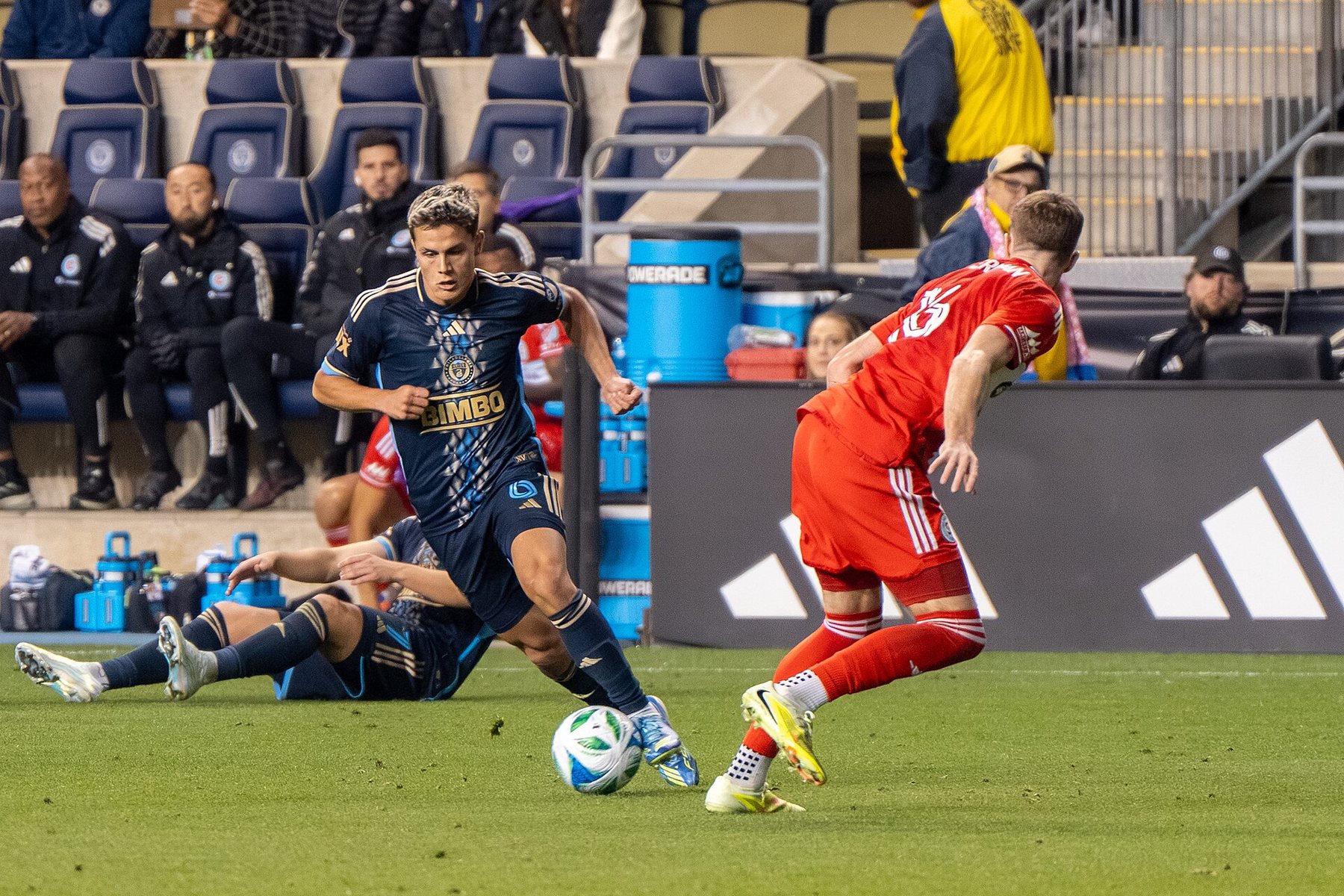 Cavan Sullivan · 2025
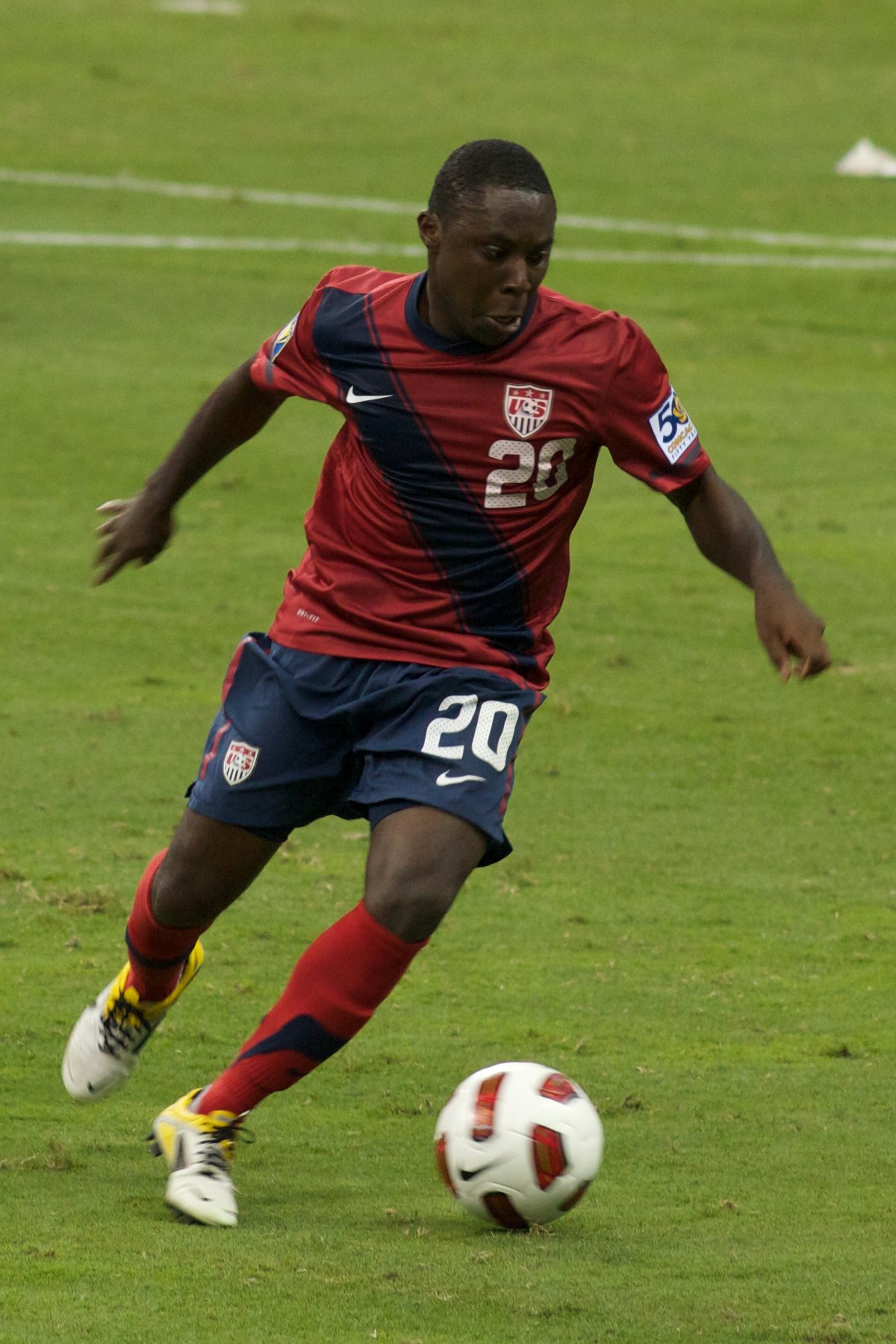 Freddy Adu · 2011
Two prodigies, two systems. Sullivan entered a genuine academy with a mapped route to Europe. Adu entered a league that knew how to debut a fourteen-year-old but not yet how to finish one. Photos: Bryan Berlin, CC BY-SA 4.0 (Sullivan); 2O, CC BY-SA 3.0 (Adu).
You could read that as a verdict on MLS quality, and the instinct in this country is to fix it with money. Turn MLS into the Premier League. Build the richest competition on earth, the way we have in most of our other sports, and the kid stops leaving because there is nowhere better to go.
Not only is that a distant fantasy. It may not be the right goal.
The richest league in the world is in England, and England has not won a men’s tournament since 1966. Croatia reached a World Cup final with a domestic league most American sports fans could not name and would never watch. Uruguay keeps producing world-class players from clubs that could not cover the wages of a single MLS designated player. League wealth is not national-team wealth. A rich league can spend its advantage importing finished players and produce very few of its own.
What matters is whether a country gives its best young players a credible stretch of professional competition between the academy and the highest level of the sport.
That stretch usually arrives between seventeen and twenty-one. A player reaches it with technique, tactical education and years of youth competition. What he lacks is experience under adult pressure. He needs opponents playing for contracts, teammates playing for bonuses, managers playing for jobs and supporters who care about the result. He needs enough meaningful minutes to make mistakes, survive them and learn what no training session can reproduce.
That is the rung.
France has built it into the structure of the professional game. A French prospect does not jump directly from an academy to Real Madrid. He gets minutes at Rennes or Lorient or Strasbourg. He faces PSG and Marseille. He may play in a relegation fight, a cup tie or Europe. By the time an English or Spanish club buys him, he has already been tested in senior football.
As mentioned in the previous section, France even measures whether its academies lead to those outcomes, evaluating them across five categories that reveal what the system considers success. It is not the number of youth trophies in the cabinet. It is whether the player moves into adult football and keeps climbing.
The departure is not proof that the French league failed to keep a star. It is how the club finances the next one.
Ligue 1 helps because its economics create room. French clubs cannot outbid the richest teams in England, Spain and Germany for finished stars, so they have to make players, use them and sell them. The league gives more of its minutes to eligible under-21 players than any of the big European leagues, close to eight percent of them, more than triple what the Premier League gives its own. The best prospects can face Champions League talent before they are ready to join a Champions League contender.11
A certificate from a French academy is not the output. The output is a nineteen-year-old surviving a Saturday night in Marseille.
Argentina reaches the same result through a much rougher economy. Its clubs cannot afford enough finished players, so they use teenagers. Then they sell them because they need the money. The whole arrangement is unstable, occasionally exploitative and permanently vulnerable to richer leagues. It also creates thousands of senior minutes for players who would still be waiting in many other countries.11
An Argentine club does not need Julián Álvarez or Enzo Fernández for ten years. It needs to identify him, play him and collect enough from the sale to repeat the process. Poverty forces the competitive opportunity that France has organized more deliberately.
Two very different leagues land in the same place. A gifted young player gets serious senior football at home before the largest clubs in Europe ask him to solve their problems.
Now look at the two leagues in our own hemisphere.
I promised you Mexico a long time ago, back when I was pulling the excuse apart, and here it is.
Mexico has more professional soccer players than any country on earth. FIFA’s count put it at 9,464 across 244 professional clubs, both figures the highest anywhere. I used those numbers earlier to make one point. Cultural saturation manufactures volume like nothing else on the planet. Here is the second point.12
All that volume runs into trouble when the eighteen-year-old reaches the first team.
Liga MX is the richest and most-watched league in the region, but it relies heavily on imported players. One study of the major Latin American leagues found that club-trained players received the lowest share of minutes in Mexico among the leagues examined, around thirteen percent, compared with more than twenty percent in Argentina. Foreign players took a much larger share of Liga MX minutes than they did in Argentina or Brazil, and the average player on the field was approaching twenty-seven.13
Picture the Mexican kid who has everything the American system struggles to provide. He was seen early. He grew up around adults who understood the game. He played constantly in a country where soccer was unquestionably first. He reaches a professional club at seventeen, already further along than almost any American kid, and finds two experienced imports in front of him because the club is trying to win now and the manager may be gone by spring if it does not.
The volume machine got him into the building. The first team has no reason to wait for him.
You can see Mexico admit the problem through its rules. Liga MX has required clubs to accumulate minimum minutes with young Mexican players and has reduced the number of foreign players clubs may use. The only way to guarantee the prospects time was to impose a quota and attach competitive penalties to it.14
That is the tension inside Liga MX. Its clubs are excellent at winning the region. Mexican teams have dominated the CONCACAF club competition for a generation, in large part because they can buy experienced players from the rest of Latin America. The same strategy that makes the clubs strong enough to rule the region can keep their own teenagers from becoming the players the national team needs.
Mexico has culture, volume and a powerful professional league. What it lacks is enough upward pressure on its best young players after they arrive. The league can give them careers without consistently pushing them toward the Champions League level.
So what about our own league, MLS?
There is a stale criticism of MLS as a retirement home for aging stars. Beckham, then Zlatan, then Messi, then Müller, famous names cashing a final check in a league that cannot trouble them. There is still some truth in the picture, but much less than there used to be. Messi’s performance in this World Cup may even suggest that MLS can provide enough competition to preserve elite sharpness.
MLS is a serious operation now. Thirty clubs, real academies and real transfer activity. It spends heavily on incoming players and sells young players into Europe in a way it rarely did a decade ago. This is not the league I started watching. It develops players now, and that part of the old criticism deserves to be retired.
The limitation comes from the thing MLS was designed to do best.
MLS was built, deliberately and intelligently, not to fail. It came out of the wreckage of every American professional soccer league before it. The old North American Soccer League put Pelé, Beckenbauer and Cruyff on American fields in the seventies and was dead a decade later. MLS responded with a salary budget, revenue sharing, cost controls, managed growth and parity as a stated objective.
It worked. The league survived.
The same structure makes it difficult for one club to accumulate enough quality to become the place every top domestic prospect graduates toward. France, Argentina, Portugal and the Netherlands all have clubs that occupy that space. Benfica, Ajax and River Plate can gather elite young talent, surround it with strong senior players, compete for major trophies and sell into the richest leagues. The concentration is unequal, but it gives the ladder direction.
MLS was designed to resist that concentration. A few designated stars are allowed, but deep separation between the best and worst rosters is treated as a defect. Transfer profits can help a club, though roster rules limit how directly and completely those proceeds can be converted into a much stronger team. Parity protects every owner’s investment and preserves the belief that almost any club can contend. It also makes the next domestic step less obvious for a player who has outgrown the club that raised him.15
The economics below MLS remain even less connected. In most of the world, training compensation and solidarity payments reward the clubs that helped develop a player when he signs professionally or moves for a fee. American soccer resisted those mechanisms for years. MLS clubs began pursuing FIFA training compensation and solidarity payments in 2019, and the league later created a development grant for eligible independent MLS NEXT academies whose players become Homegrown professionals. Those are meaningful changes, but they cover only part of the youth landscape. For many American clubs, the reliable money still comes from the family paying this season, not from the professional the club might produce five years from now. The player moves up, but the money does not consistently flow back down to fund the next one.16
That broken economics helps explain why the American system is still a collection of adjacent businesses rather than one ladder. A local club may develop a player, lose him to an MLS academy and receive little or nothing. The MLS club may eventually sell him abroad and reinvest within league limits. The original club goes back to collecting fees from the next family. Everyone can behave rationally and the system still fails to reward the earliest and widest search for talent.
None of this means American clubs can’t become good at development.
Philadelphia has built its identity around it. Before Cavan Sullivan, the Union developed Brenden Aaronson, Paxten Aaronson and Mark McKenzie and sold all three into Europe. Orlando did it with Alex Freeman, who was cut by the Inter Miami academy at fifteen, moved across the state, spent three seasons mostly in the reserves, then broke through, won Young Player of the Year and left for Villarreal within a year.17
So the model exists here. But it is optional.
France does not merely praise academies that produce players. Its federation and professional system regulate, inspect and evaluate them, and an approved center that fails to meet the required standards can lose its status. Philadelphia chose development as an organizational identity. Another MLS club can make a different choice and suffer no comparable institutional consequence.
Notice where Freeman went once he broke through. He did not transfer to a larger American club, because MLS does not have an established class of larger clubs that occupy a higher competitive tier. He went directly to Spain.
That leaves the best American prospects with an awkward decision. They can stay in MLS, where playing time may be easier to earn but the weekly level eventually tops out. Or they can leave early for a deeper European club and risk spending the years they most need to play on the bench or in another reserve team. The available choices are improving, especially with MLS NEXT Pro, but the distance between a good MLS academy and a Champions League environment remains too large.
Cavan Sullivan’s contract recognizes that reality without pretending otherwise. Philadelphia gets time to develop him and a transfer fee if the plan works. Manchester City reserves its place at the end of the process. Sullivan gets a defined route beyond MLS without having to leave home at fourteen.
The most complete American pathway still depends on another country’s league for the final stages.
Set Mexico and the United States beside each other and the contrast becomes useful. Mexico has a dense soccer culture and thousands of professionals, but its strongest clubs can buy over their own prospects. MLS has improved the elite pathway and created stability, but parity and a closed hierarchy limit how far a player can rise domestically. Mexico’s clubs have too much incentive to import the finished product. American clubs have too little freedom and too little obligation to become finishing schools.
Both systems can manufacture professionals. Neither consistently creates the competitive climb that France and Argentina give their best young players.
This is still different from the potrero.
A league is an institution. Its incentives can be changed. MLS could let clubs keep and deploy more of their transfer proceeds. It could give additional roster flexibility to organizations that produce and sell players. American soccer could strengthen training compensation so money reaches more of the clubs that did the early work. It could connect independent professional divisions more tightly and create more first-team jobs with genuine consequences. It could accept greater competitive inequality if that inequality came from clubs building better development systems rather than merely buying famous veterans.
Every one of those changes is administratively possible.
They are also hard for the exact reason MLS succeeded. You would be asking thirty owners who bought into a protected, stable and balanced league to create more risk and more hierarchy. You would be asking some of them to accept that other clubs may become permanent destinations while theirs become suppliers. You would be asking the most successful stability machine in American soccer history to loosen the controls that made it trustworthy.
The missing rung can be built. Building it requires the institution capable of doing so to value player production more than competitive symmetry.
That is not a wall. It is a choice.
Before we get to what the honest build would look like, though, there is an inconvenient piece of evidence hanging around. One American soccer program did become the best in the world during my lifetime, using many of the same institutions I have spent two parts criticizing. It did so without Argentina’s potrero, without France’s depth of professional clubs and, for most of its rise, without a stable domestic league.
The trouble is that the story of how it happened is quite different from this story. Once you understand why it worked, you understand how much of it the men’s game can copy and exactly where the copying stops.
03The Head Start
The United States already built the best national soccer team in the world. Four World Cups. Five Olympic gold medals, the most recent one two summers ago in Paris. The USWNT is the most decorated program in the history of the women’s game, and it was built out of the exact institutions I have spent two parts telling you cannot produce a world power. Suburban clubs. High school teams. College scholarships. Pay-to-play, in all its expensive glory. No potrero. No baby fútbol. No grandmother arguing about the lineup. The machine I have been describing as structurally incapable of producing world-class players produced the winningest team on earth.18
So which is it?
The tempting read is the optimistic one, and you hear it every four years, right around the time the men go out. The women prove it can be done here. Same country, same fields, same minivans. Find the men’s version of whatever the women found and a star shows up on the men’s crest too.
I wish that were the story. The actual story is better evidence for everything in this essay than anything I could have invented, but you have to run the timeline honestly to see it.
Start with a law, because once again the story starts with a law, except this time nobody passed it for soccer reasons.
Title IX became law in 1972. It was not a soccer policy. It was barely a sports policy. It said that schools taking federal money had to give girls meaningful athletic opportunities, and then it let the consequences run. In the school year before it passed, about 294,000 American girls played high school sports, compared to 3.7 million boys. Within a few years, women’s college athletic participation had doubled. Today, girls participate in high school sports at more than eleven times the pre-Title IX rate, and soccer became one of the biggest beneficiaries of the whole project. Right now there are roughly 400,000 girls playing high school soccer in this country and more than 30,000 women playing it in the NCAA.19
Notice what that law actually built, because it was not a team. It was infrastructure. Teams in thousands of communities. Regular coaching and regular competition. Scholarships that made staying in the sport economically rational. Trainers, facilities, strength programs, and a national network through which a player could be seen, compared and selected. A completely ordinary, culturally legible path from a rec field to a college roster to a national team.
That should sound familiar. It is the French move. Build the apparatus, point it at a population, and let it compound. We did it by accident. And we did it for girls.
Now run the clock. 1972, the law. 1982, the NCAA holds its first women’s soccer championship. 1991, the United States wins the first Women’s World Cup ever played. The first American attempt at a professional women’s league did not launch until 2001, and it died in three years, and so did the next one, and the league that finally survived did not kick off until 2013. We won a world title a decade before this country managed to field a professional women’s league at all, and twenty-two years before one stuck. The pro league did not create the advantage. The colleges did.20
That is half the story. The other half is the half Americans are less familiar with, and it is the half that explains everything.
While we were building, the rest of the world was banning.
In December 1921, the English FA banned women from playing on the grounds of its affiliated clubs, declaring the game quite unsuitable for females. This was not a ban on a fringe activity. A year earlier, on Boxing Day 1920, a women’s match at Goodison Park had drawn 53,000 people. The ban stood for fifty years. Germany’s federation banned women’s football from 1955 to 1970. Brazil went further and made it illegal, by federal decree, from 1941 until 1979. Not discouraged. Not underfunded. Illegal.21
In the women’s game everybody started at once, and we started with a system already built.
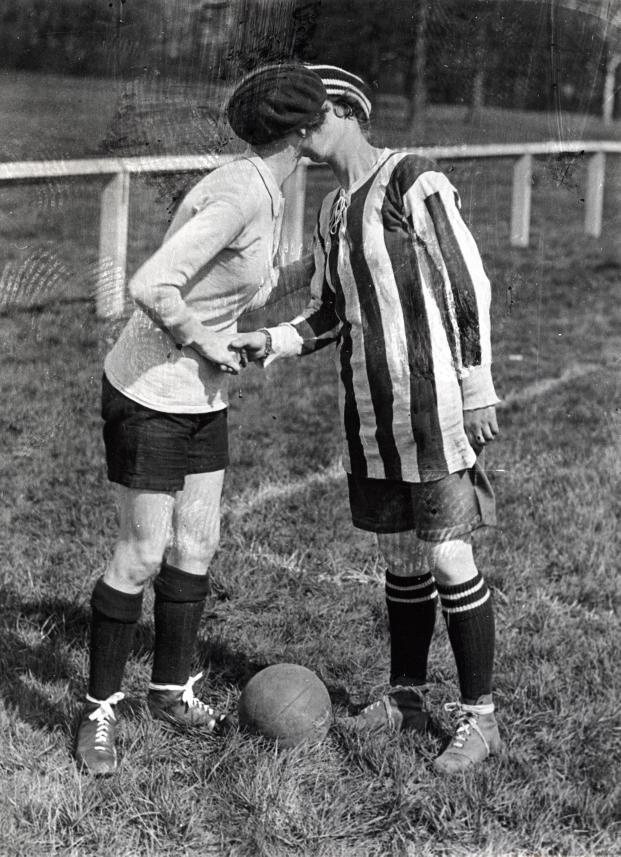 Europe · 1920
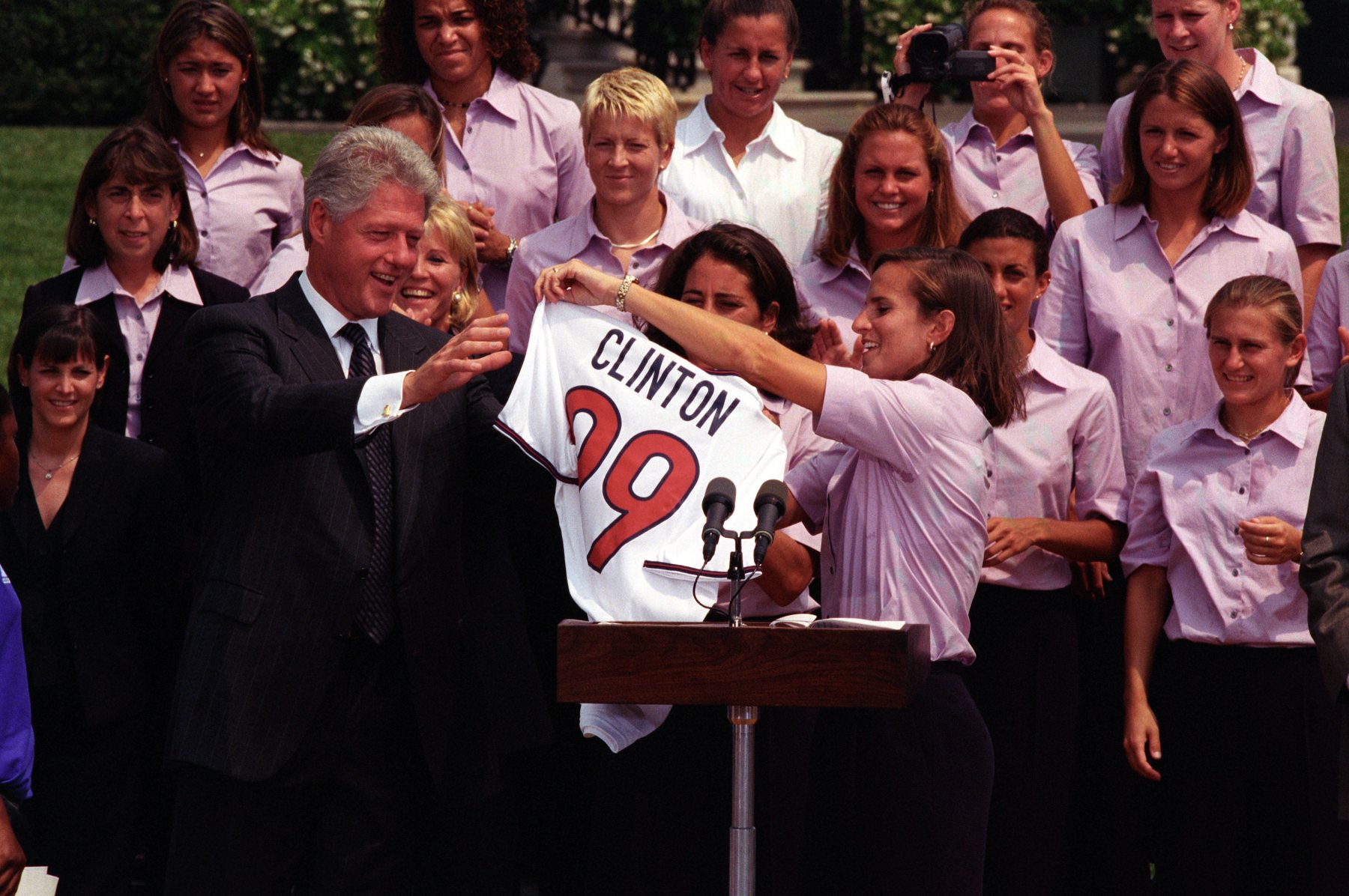 United States · 1999
While America built, Europe banned. A women’s international drew 53,000 at Goodison Park in 1920; the English FA barred women from affiliated grounds a year later. By 1999, an American system opened by Title IX had produced its second world champion. Photos: Nationaal Archief, public domain (1920); Ralph Alswang / White House Photograph Office, public domain via the National Archives.
Remember the founding-date study from Part One. Economists found that the year a country first organized the sport predicts where it ranks a century later, because organizing early compounds, and the founding date is a receipt for a game that was already in the ground. I told you we are the country that breaks that model on the men’s side, because we filed the paperwork in 1913 and the compounding never happened.
In the women’s game, we finally got to run the experiment from the right side of it. We organized first, at national scale, and this time the game really was in the ground, because millions of American girls were playing. And the model performed exactly as advertised. Compounding. Dominance. Thirty years of being the program everyone else measured themselves against.
And notice what this does to the excuse. American women have alternatives too. Basketball, track, volleyball, softball, swimming, gymnastics, lacrosse, an entire Title IX buffet of scholarships in other sports. If national soccer success really hinged on a country’s best athletes choosing soccer, the USWNT should have been strangled in the crib by the same competition for talent that supposedly dooms the men. Instead the United States dominated women’s soccer while also dominating half of those other sports. The women did not win because they got all the athletes. They won because the ones who played soccer entered a functioning system.
If you want proof that the advantage was infrastructure rather than some hidden American soccer genius, look south again, because Argentina is the control group one more time, just pointed in the other direction.
Argentina’s men went into this World Cup ranked first in the world. Argentina’s women are ranked twenty-seventh. Same country. Same clubs. Same streets, same potrero, same grandmothers, same hundred years of accumulated knowledge sitting in every neighborhood. The women got almost none of it, because none of it was built for them. The Argentine women’s league was not professionalized until 2019, and only then after a players’ strike, and as recently as 2024 national team players were walking out of camp over unpaid expenses and meal money.22
Everything I told you about the potrero is true. The potrero was for boys. A country can love this game more than any place on earth and still throw away half its population completely.
Which means the USWNT and the Argentine women are the same finding, stated twice. It was never about who loves the game. It is about who gets admitted to the machine.
Now the part that stings, which is the reason none of this transfers to the men.
The engine of the women’s advantage was the college system, and the college system worked because of when it worked. In 1991 there was essentially no professional women’s soccer anywhere on earth. An American woman could spend the ages of eighteen to twenty-two inside a scholarship-funded, professionally coached, well-fed, seriously competitive environment, playing against the best opposition available to any woman on the planet, because the alternative in most countries was nothing at all. College was not a detour from elite development. College was elite development, arguably the best version of it in the world, because the rest of the world had declined to build one.
Now ask what those ages are in the men’s game. You already know, because I just spent an entire section on it. Seventeen to twenty-one is the rung. Messi was in Barcelona’s first team at seventeen. Mbappé debuted for Monaco at sixteen. The years the American college system asks a player to spend as an amateur, playing a three-month season, are the exact years a French or Argentine prospect spends getting his professional education against grown men.
The same institution, at the same ages, was a head start for the women and a parking lot for the men. Not because anyone designed it badly. Because the women’s competitive environment was empty and the men’s was a hundred years old.
That is the whole difference between the two programs, and it fits in a sentence. The women were early to a young sport. The men are late to an old one.
You can watch the head start expire, too, because it is expiring right now, in real time.
In 2023 the USWNT went out of the World Cup in the round of sixteen, the earliest exit in the program’s history, and if that round sounds familiar it should. Spain won that tournament. England won the Euros last summer, beating Spain on penalties. Spain has been ranked number one in the world since last August, with the United States second. The Olympic gold in Paris says this program is still elite, and it is. But the era when American dominance was structural is over, and the reason is not American decline. The reason is that the countries with hundred-year-old soccer machines finally started letting girls into them.23
Spain did not need to invent soccer knowledge. It needed to let girls in on the knowledge it already had. England did not need to build a football culture. It needed to stop banning half its population from the one it built first. And France, of course, is running the full program. Record numbers of registered girls, a professional women’s league structure stood up in 2024, the same federation apparatus I described in the last part, now being aimed at a new population. Women are still barely a tenth of French licenses, which tells you how early in the process they are, and the team is already ranked sixth in the world. The machine works on whoever it is pointed at. That was always the point of the machine.24
The women’s game in 2026 looks like the men’s game did a century ago. The early organizers are cashing in their head start while the sleeping powers wake up. We know how that movie ends, because we are currently living in the ending of the men’s version. It ends with the early mover holding a lot of history and facing a harder fight every cycle.
So no, the USWNT is not the counterexample. It is the proof.
It proves the central claim of this entire essay, which is that passion and population and athletic ability are raw material, and raw material sits in the ground until something is built to get it out. The women won because America built a female athletic apparatus before the soccer world stopped excluding women, and the compounding did the rest. The men struggle because their hundred and ten years never compounded, and they are trying to enter the most mature talent industry in world sport from a standing start. Same principle. Opposite ends of it.
It also tells you exactly what a head start is worth, and what its absence costs. The women got theirs from a law that had nothing to do with soccer, aimed at institutions that already existed, and it bought them thirty years on top of the world. The men will not be getting one. Every institution in their version has to be built on purpose, into the teeth of a century of everyone else’s compounding, and then maintained for decades by people who will not be around for the harvest.
The women were handed a head start. The men are going to have to build one by hand.
Which is what comes next.
04The Build
So, what gets built? Who builds it? What does it cost? How would we know it was working?
Back in the section on the excuse I told you there are two kinds of American soccer neighborhoods, and I promised the distinction would matter. This is where it matters, because they are two different problems living in the same country, and they need two different tools.
In the first kind of neighborhood, the game is already here. It has been here for decades. It is the Sunday league in Houston and the church league in Los Angeles, the indoor barn, the unaffiliated tournament that fills four fields every weekend and has never once appeared in a federation database. It is the upper deck at RFK in 2001 and the Mexico fans in Recife who turned out to be from the United States. The oil is in the ground. The institutions of the sport simply have no eyes on it and no economic reason to grow any. That is a scouting problem, and scouting problems are cheap.
In the second kind of neighborhood there is nothing to scout. No club, no playable field, no league, no adult nearby who could tell a good touch from a lucky one. You cannot search a game that is not there. That is a construction problem, and construction problems are slow and expensive and pay off on a timeline that outlives everybody’s job.
Both are real. Neither substitutes for the other. A search party in an empty neighborhood finds nothing, and a gorgeous new court in a neighborhood the sport never visits is a skateboard spot within a year. So take them in order.
The search comes first, because it is the closest thing to a bargain this sport will ever be offered.
The good news is some of this is already happening. U.S. Soccer has a talent identification department. There are regional Talent ID Managers, a national network of scouts, and Talent ID Centers around the country that put more than four thousand boys and girls through sessions in the last cycle.25
US Club Soccer has run a program called id2 since 2004, that is free to be scouted, free to participate, open to any player regardless of federation affiliation, and built on the principle that a kid should initially be scouted in the environment where he is most comfortable rather than dragged to a combine. It is currently expanding into what it calls the largest scouting network in the country, six to eight regions with lead scouts in each, explicitly aimed at finding players in traditional and non-traditional pathways alike.26
The federation is also on the record about the gap. CEO JT Batson said this year that U.S. Soccer needs to scout way more players, that the federation has built its own software with more than ten thousand players tracked inside it, and that this is still not enough.27
So it is not that nobody is looking. People are looking, some of them are good at it, and a few of them have been at it for twenty years on a budget nobody notices.
The problem is that the search is pointed at the wrong end of the funnel.
Look at how a boy enters U.S. Soccer’s system. There are no sign-ups for a Talent ID Center. Players are identified and selected by scouts based on their potential and their progression with their club teams. The qualifying condition is that you are already on a club team, playing in the leagues where scouts stand, at thirteen, four years after the price of entry started removing children. Even id2, which is genuinely designed to reach further, invites players off the back of showcases and regional leagues and player development programs, and those are the paid circuit. The intent is to search the whole country. The mechanism searches the part of the country that already enrolled.25
So the ask is not invention. It is conversion, and multiplication, and a lower age.
Hire the American three hundred.
And three hundred is an underestimate. France has roughly that many for sixty-eight million people, which is one for every two hundred and twenty-seven thousand citizens. Run our population through the same ratio and the number is closer to fifteen hundred.28
As I said before, the work is unglamorous. The deliverable is a Saturday in a folding chair at a complex two hours from your house, watching under-11s, and then a twenty-minute conversation with a volunteer coach about how he might restructure his warm-up. It is mileage and per diems and a database. It is also the entire difference between a country that samples its population and a country that samples its customers.
And I can tell you what the coach on the other end of that twenty-minute conversation currently gets instead, because I have been that coach.
Here too there is something real. U.S. Soccer runs a free program called Coach for Community. It is aimed at grassroots coaches, with a stated emphasis on new coaches in underserved communities. The events run one to three hours, in person or virtual, and everybody who attends walks out with a voucher for a free online grassroots course. That is an intelligent thing to do and whoever designed it understood the problem.29
I have never been to one. Neither has any coach I know.
That is not the program’s fault. It is the delivery. A Coach for Community event happens because a member organization requests one and hosts it. The help is real and the help is free and the help is sitting behind a request that a volunteer has to know exists and then go make. Which means it reaches the leagues with an administrator who reads federation email, and does not reach the ones without. It is a resource, and resources wait. The French adviser is not a resource. He is a guy who shows up.
Now the license, because that is the other thing on offer, and the math on it is the system in miniature.
I do not hold a coaching license. Not even the entry-level one. That might be surprising, given how much of my life this game occupies, so let me walk through the actual decision.
The bottom rung is fine, honestly. The grassroots modules cost somewhere between twenty-five and eighty dollars apiece, run about two hours, and some can be done online. If that were the whole ask I would have done it years ago. But the first real credential, the D license, runs three to five hundred and fifty dollars depending on the host, and it takes nine weeks, with in-person weekends and assignments and virtual meetings in between. Nine weeks. I coach six-year-olds, for free, in a rec league. So the math does not work for a volunteer like myself.30
Above the D, the ladder turns into a professional expense. The C runs over a thousand dollars at most hosts, the B around three thousand, the A around four, the pro license into five figures. None of that is scandalous on its own. Those are career credentials for people who earn the money back in salary.
What is off is the shape of the whole offer. The paid ladder is built for people entering the profession. The free help is built as an event you have to request. Neither one is built as a person whose job is to come find the volunteer. France pays people to drive out to the man on the rec field and make him better whether he asked or not, because the federation decided a long time ago that the rec field is where the raw material comes from. We charge him, or we wait for him to raise his hand, and then we are surprised that he assembled his coaching off the internet.
Why doesn’t the coaching job come with a manual?
How simple would it be to hand down age-specific practice guidelines for rec councils to pass on to new volunteers?
Now the cost of fixing it. Fifteen hundred salaries, generously, six figures apiece fully loaded, with cars and laptops and a layer of administrators on top, is something like two hundred million dollars a year. Now that may be some back-of-the-envelope math, but put that number next to the industry it would be reforming.31
American families already spend billions of dollars a year on youth sports, and soccer is among the most expensive mass-participation games in that economy, much of it flowing into the exact pay-to-play machine this essay has been taking apart. That is before you count a thirty-club MLS whose revenues and franchise values now run into the billions. Two hundred million dollars is a serious public commitment. Against the scale of the industry it would repair, it is not a fantasy number.32
The searchers would also have to be graded on the right variable, or in a decade they become one more program. Grade them the way France grades its academies, on outputs. Players discovered outside the existing club system who stick. Volunteer coaches trained who are still coaching, and coaching better, two years later. Not events held. Not clinics attended. Discoveries that survive.
That is the first job. The second is harder, and it is the one I promised you back in Part One, when I said you should build the futsal court and that I would argue for it at length. Here is the argument, and it comes with a plot twist, because the best construction program in the history of American soccer already exists. When I told you earlier that we were doing neither of these jobs with any seriousness, I should have been more precise. The sport’s governing institutions are doing neither. Somebody adjacent to them is quietly doing one.
The U.S. Soccer Foundation is a charity. It was set up to receive the surplus left over from the 1994 World Cup, the tournament I watched at nine, and it has spent three decades pointing that money at the exact communities this essay has been about. Its signature project is the mini-pitch, a small hard-court soccer space dropped into a neighborhood, with real goals, benches, lockable equipment storage and, crucially, lights. The Foundation has installed more than nine hundred of them, is aiming for a thousand by the end of this year, and estimates that six and a half million American kids now live within a half mile of one.33
Stay on the lights for a second, because the lights are the whole philosophy in one fixture. The Foundation’s own numbers say lighting adds an average of two and three-quarter hours of playing time per pitch per day. Go back to the hardest sentence in Part One, the one about how the best coach in America cannot manufacture Wednesday. Lights on a free court a short walk from a kid’s front door are the closest this country has come to manufacturing Wednesday. Nobody schedules those hours. Nobody signs a waiver for them. They are not a program. They are just available, every evening, which is the entire point, and which no other institution in American soccer has figured out how to be.33
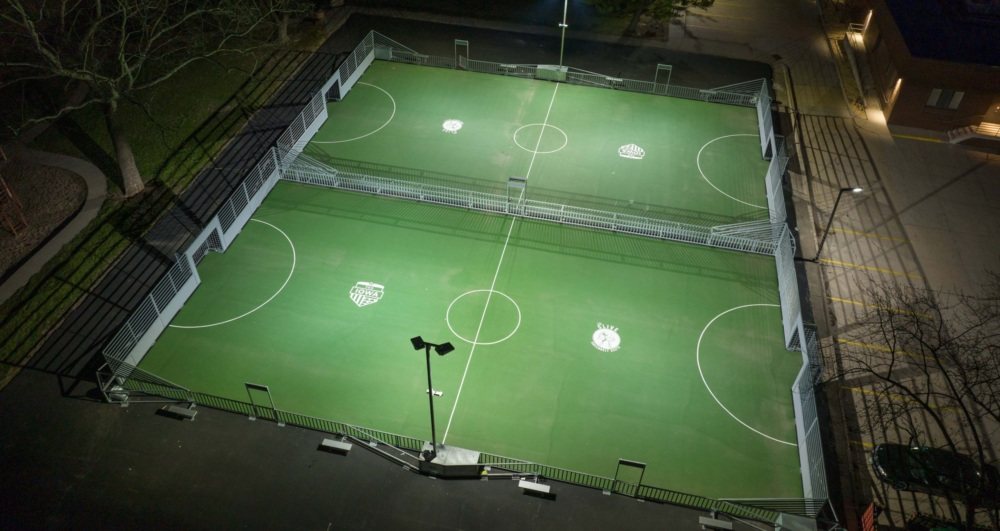
A court is still only the place where the thing might happen. A mini-pitch in a neighborhood with no game around it is an amenity. But this is where the two jobs converge, because the map of where the courts do the most good and the map of where the searchers should be driving is the same map. Put the court where the Sunday league already plays and you have given an existing culture a permanent home with the lights on. Put the court where nothing exists, add the free programming the Foundation already runs, route the technical adviser past it on his Saturday loop, and you have poured the first square foot of a culture where there was none. Construction hands the search party something to find.

So here is a natural question. If this organization has spent thirty years doing the most French thing in American soccer, what has the federation’s role in it been?
In 2018, the federation demanded that the Foundation stop using its name.
I am not exaggerating for effect. The U.S. Soccer Federation informed the U.S. Soccer Foundation, the charity built out of the 1994 surplus, that their relationship was over and that the Foundation should abandon the name and logos it had been operating under for more than two decades. The Foundation’s complaint, filed in federal court that December, alleged that the federation wanted the marks for itself, likely to capitalize on the business opportunities of a home World Cup in 2026. The charity had to sue the governing body of the sport to keep the name it had been operating under. The case settled a year and a half later, after the federation changed presidents, on undisclosed terms, with a joint statement about working together for kids in low-income communities. The Foundation still has the name.34
Eighteen months of litigation between American soccer’s federation and the only institution building free soccer fields in poor neighborhoods.
The third piece is money, and I can be brief, because the missing rung already carried most of it. The principle fits in a sentence. Every organization in American soccer should make more money when a player advances than when a family enrolls. Training compensation and solidarity payments flowing to every club that touched a player, all the way down to the rec council, so that the church league that raised a professional sees a check. A federation-funded registration voucher, an American cousin of France’s Pass’Sport, with a hard target attached. A season of entry-level youth soccer for under two hundred dollars, anywhere in the country, full stop. The searchers widen the sample. The vouchers keep the sample from shrinking at age nine. The solidarity money gives every league in the country a reason to care that the search succeeds.16
The fourth piece is the form. France built the form, the annual table that grades every professional academy on contracts signed, first-team minutes, national team selections and school. Build ours. Publish it every spring. Put every MLS academy and every affiliated development program on it, with consequences attached to the bottom of the table and roster and financial rewards attached to the top. Then put the searchers and the courts on a version of it too. This country can be trusted to manage anything it measures. The entire trick is choosing to measure outputs that arrive in 2035 instead of enrollments that arrive in March.3
Which brings us to the last piece, and the real one. I already told you, at the end of the section on France, that the check and the org chart are the easy part and that, as Tom Petty once said, the waiting is the hardest part. France built the machinery, missed two World Cups and left it running. The final requirement is making sure the American version survives the same barren years. So do not design the American build to depend on anyone’s patience. Design it so the patience is structural.
We have the proof of concept for that too, and it is the same charity. The Foundation has survived every coaching regime, every federation administration, every league rebrand and one lawsuit since 1994, for a simple reason. Its money was set aside once, its mission was fixed, and none of it ever comes up for a vote. That is what an endowment is. Patience, converted into a legal structure. If this World Cup leaves anything behind, in money or in will, the lesson of 1994 is sitting right there. Do not hand the build to a body whose leadership turns over every election cycle and whose incentives reset every four years. Endow it. Fix the mission. Publish the table. Let it be boring for two decades, and staff it with people who understand they are working for a verdict that arrives in 2040.33
None of this is romantic, because the romantic version of American soccer’s future is the version that never arrives. But I want to close this section with the reason I believe in the unromantic version, and it is personal, because by now you know that everything in this essay eventually is.
Every piece of real soccer knowledge that ever reached my childhood arrived by a happy accident, and thirty years later by a similar accident reached my son. Two generations of one family, in one of the more soccer-literate corners of America, and the sum total of the system’s contribution to either of us is zero.
The build is not a mystery. It is the accident, made deliberate.
We would still be living behind the wall, and the rung would still need building. But that is what a head start built by hand looks like, one line item at a time.
05Growing Into It

They played the World Cup final at MetLife Stadium last Sunday, a few hours up the road from me. My son watched because Messi was playing and the one thing he knows about soccer is that, “Messi is the goat.”
He is six. He did not care much that the game was being played in our country, in a stadium built for the Jets and Giants, or that two weeks earlier the United States had been eliminated from its own tournament. He knew Messi was special, so he climbed onto the couch and watched.
Sometime around the hour mark, without looking away from the television, he asked me a question.
“What do I have to do to become the next Messi?”
I told him the only true answer. Practice. Lots and lots of practice. More touches on the ball than anyone will ever make you take. Every day, starting now.
I did not tell him that a boy his age in Rosario has probably already put more hours on a ball than he has. Not because that boy is more talented, or faster, or tougher, but because the ball is simply there. It is under his feet on the ordinary Wednesday afternoon when my son’s is sitting in a bag in the garage. There are older kids to play against, adults who know what they are watching and a club close enough to walk to. Nobody has to create the conditions for him. He was born inside them.
But I keep coming back to the way my son asked the question.
He did not ask when. He asked what.
American soccer has spent most of my life asking when. When will the sport become popular enough? When will MLS become big enough? When will the children who grew up watching the Premier League become parents? When will the next academy class arrive? When will all of this growth finally turn into a team capable of winning a World Cup?
Wait until 2030.
That is the mistake underneath the word yet. We have treated progress as if it were biological, something that naturally arrives with another generation of fans and another four years on the calendar.
Children grow because time passes. Institutions do not.
The US jersey I bought my son before the tournament is a size too big.
That was intentional. Almost everything we buy him is a size too big, because six-year-olds grow quickly and it seems foolish to spend eighty dollars on something that fits for three months. The sleeves hang past his wrists. The bottom nearly reaches his knees. Eventually, probably sooner than I expect, it will fit him.
I think that is how I have understood American soccer for most of my life. We bought the jersey before we had the team to fill it and assumed time would take care of the rest.
In 1994, I was nine years old and watched the United States lose to Brazil in the round of sixteen. The tournament filled stadiums, launched MLS and introduced millions of American children to the biggest sporting event on earth. The future seemed obvious. Soccer was growing. The professional league was coming. The next generation would grow up with the game in a way mine had not, and then their children would grow up with even more of it. At some point, the shirt would fit.
Thirty-two years later, my son watched the United States lose in the same round.
That does not mean the last three decades produced nothing. The team he watched was much better than the one I watched. The players were more skilled. MLS is successful. World Cup tickets were nearly impossible to get. My son learned the chants and songs, cheered for Pulisic and McKennie and tuned into the final because he already understood that Messi was somebody he needed to see.
The game has grown.
That is not the same as building the thing required to win it.
France matters because it stopped asking when and started asking what. What would have to exist for talented children to be found wherever they lived? What would clubs have to be required and rewarded to do? What would have to remain in place for twenty years, through failed coaches, bad tournaments and changing governments, before anyone could reasonably expect the result?
France was not a shortcut. It was almost the opposite. It was a country choosing what it wanted to become and continuing the work long after the people who started it had disappeared from the story.
That is the part of the model I find both encouraging and difficult to imagine here. We have many of the same ingredients France had: wealth, population, immigration, cities full of soccer, professional clubs and millions of children already playing. What we have rarely shown is the willingness to choose a distant result over an immediate one and then keep choosing it after the people who made the original decision are gone.
If the real work started tomorrow, it would not rescue the next World Cup cycle. The children it reached first would be six or eight years old. They would still be children in 2030. Some would be teenagers in 2034. The first honest accounting might not come until 2038 or 2042, when my son is an adult and I am old enough to become the grandfather standing beside the field with opinions nobody asked for.
Maybe he will still love soccer then. Maybe he will have abandoned it for baseball or music or something that does not yet exist. I have no particular expectation that he will become a serious player, and that is not why any of this matters to me.
I do not need a system that turns my son into a professional. I want one that does not require the next great American player to be born into exactly the right family, find exactly the right club and encounter exactly the right person by accident.
Everything meaningful that reached my own childhood in this game arrived that way. An English coach who happened to buy a house in our town. A couple of Yugoslav professionals who appeared at practice on the occasional Tuesday. Thirty years later, my son received a season of real coaching from Baltimore Blast players because somebody on the rec council happened to have the right phone number.
I want the next kid to get all of that because somebody decided he should. I want it to become ordinary enough that nobody remembers to write it down thirty years later. I want there to be more ways into the game than having a father who already knows where the doors are.

That would not make us Argentina. Nothing will. Argentina inherited a living football culture that reaches backward through generations, and there is no policy capable of giving us the childhoods we did not have.
Inheritance is not the only way to leave something behind.
My son will grow into his jersey. That part requires nothing except time.
Whether the national team ever grows into what the jersey represents is different. That will not happen because we wait long enough, care hard enough or host another World Cup. It will happen only if we build something worth inheriting and leave it running for children whose names we will never know.
My son asked what he had to do.
It is time American soccer asked the same question.
Notes & sources
- Clairefontaine’s history and role are documented by the French Football Federation. The INF’s small, regional intake, weekday boarding and weekend return to home clubs are described in the federation’s academy materials. ↩
- France’s approved professional training centers operate under a state-and-federation framework covering schooling, sport, medical care, housing and staffing; approval can be withdrawn. See the French Ministry of Sport. ↩
- The FFF’s 2024–25 academy evaluation covers 33 clubs and scores professionalization, first-team minutes, national-team selections, schooling and European representation. ↩
- The FFF describes a network of 13 regional technical directorates, 90 departmental commissions and more than 300 advisers across roughly 13,000 clubs: “Le Made in France, c’est du solide”. ↩
- French club fees vary; the range here reflects representative amateur-club schedules. The national Pass’Sport program offered a €70 voucher in 2025–26, primarily for eligible 14–17-year-olds receiving the school-year allowance, as well as certain students and young people with disabilities. ↩
- The Aspen Institute’s Project Play reports $1,188 as the average annual family spending on a child’s primary soccer participation: Project Play, participation-cost facts. The comparison with French fees is approximate. ↩
- Opta’s 2026 birthplace analysis counted 99 World Cup players born in France and 54 born in Île-de-France: L’Équipe. ↩
- The FFF traces the national center from planning in the 1970s to its 1988 inauguration: FFF history. France then missed the 1990 and 1994 World Cups before winning in 1998. ↩
- The Philadelphia Union documents Sullivan’s family and Homegrown deal. His planned move to Manchester City and reported terms were reported by Reuters; because he was a minor, the clubs did not publish full transfer terms. ↩
- Adu’s 2004 debut record and the pressure surrounding his career are revisited in MLS’s retrospective interview. ↩
- CIES found that in 2024–25 France-eligible under-21 players received 7.8% of Ligue 1 minutes, versus 2.4% in the Premier League and 1.9% in Serie A. Argentina led the 50 leagues studied in the raw number of eligible U21 players and minutes: CIES Weekly Post 522. ↩
- FIFA’s Professional Football Report 2023 counted 9,464 male professionals and 244 professional clubs in Mexico, both global highs. ↩
- CIES’s Latin American league comparison found the lowest club-trained share in Mexico and a substantially higher share in Argentina. See CIES Monthly Report 62 (PDF). “Club-trained” is not the same as nationality; it measures players who spent at least three seasons with their employer between ages 15 and 21. ↩
- The Mexican federation approved a 1,170-minute youth requirement for 2025–26: FMF owners’ assembly. The Liga MX rules define eligibility and sanctions (PDF). ↩
- MLS’s current rules govern salary budgets, transfer-revenue conversion, General Allocation Money, Designated Players and Homegrowns: MLS Roster Rules and Regulations. ↩
- MLS clubs began pursuing FIFA training compensation and solidarity payments in 2019: MLS. The later MLS NEXT Development Grant compensates eligible independent academies in a narrower set of cases. ↩
- MLS details Philadelphia’s development-and-sale model in this academy profile. Orlando City announced Alex Freeman’s club-record Homegrown transfer to Villarreal in January 2026. ↩
- U.S. Soccer records four Women’s World Cups and five Olympic gold medals, including Paris 2024: USWNT Paris highlights and program totals. ↩
- NFHS reports 3,666,917 boys and 294,015 girls in high-school sports in 1971–72 and more than an elevenfold rise in girls’ participation since: NFHS. Current soccer totals are rounded from the latest NFHS and NCAA participation reports. ↩
- Timeline: Title IX became law in 1972; the NCAA held its first women’s soccer championship in 1982; the United States won the inaugural Women’s World Cup in 1991. WUSA played from 2001–03, WPS from 2009–11 and the NWSL began in 2013. ↩
- The English FA’s heritage material documents the 1921 ban and its 1971 repeal; the DFB’s official history records Germany’s 1955–70 ban. Brazil’s federal government traces the restriction from Decree-Law 3.199 in 1941 to its 1979 repeal. ↩
- The June 2026 FIFA rankings list Argentina’s men first and its women 27th. The women’s league began professionalization in 2019. In 2024, national-team players left camp over pay, food and conditions: Associated Press. ↩
- The June 16, 2026 FIFA women’s ranking placed Spain first, the United States second, England fourth and France sixth: FIFA. Tournament results are from FIFA and UEFA competition records. ↩
- The FFF reported a record 251,299 female registrations in 2023–24—10.5% of all licenses—and the launch of its professional women’s league organization in 2024: FFF registration report. ↩
- U.S. Soccer describes its regional managers, scouts, Talent ID Centers and selection process on its Talent Identification pages and FAQ. Players cannot sign themselves up; scouts and club staff identify them. ↩
- US Club Soccer’s id2 program is free to be scouted and to participate in, regardless of federation affiliation, and begins evaluation in a player’s home environment. ↩
- Batson’s comments about expanding the pool and tracking more than 10,000 players came in a June 2026 talkSPORT interview, summarized by Yahoo Sports. ↩
- Author’s calculation: about 300 French advisers for roughly 68 million people is one per 227,000. The equivalent for a U.S. population near 342 million is approximately 1,500. ↩
- U.S. Soccer introduced Coach for Community as a free, hosted clinic for new coaches, with a voucher for an online Grassroots course and an emphasis on underserved areas. ↩
- Course prices and schedules vary by host. Grassroots modules are short and often online; the D course commonly costs several hundred dollars and takes multiple weeks. Upper licenses are professional credentials whose fees can run into the thousands. Current offerings are published in the U.S. Soccer Learning Center. ↩
- Author’s estimate: 1,500 advisers at roughly $130,000 each in salary, benefits, travel, equipment and administration produces an annual cost near $200 million. It is an order-of-magnitude estimate, not a federation proposal. ↩
- The larger comparison is intentionally broad. The Aspen Institute and Associated Press describe U.S. youth sports as a multibillion-dollar family economy and document soccer fees reaching five figures for some families: Associated Press, July 2026. ↩
- The U.S. Soccer Foundation traces its origin to the 1994 World Cup surplus. Its Safe Places to Play program reports more than 900 mini-pitches, 6.5 million children living within a half mile of one and a goal of 1,000 by the end of 2026. The Foundation’s mini-pitch study covers location, use and lighting (PDF). ↩
- The Foundation filed its complaint in December 2018 after the federation demanded it stop using the U.S. Soccer name and marks: Foundation statement and complaint summary. The parties settled and dismissed the case in May 2020. ↩
Photography & licensing
Clairefontaine: Xavoun, CC BY-SA 3.0. Cavan Sullivan: Bryan Berlin, CC BY-SA 4.0. Freddy Adu: 2O, CC BY-SA 3.0. Dick, Kerr Ladies: Nationaal Archief, public domain. 1999 USWNT: Ralph Alswang / White House Photograph Office / National Archives, public domain.
Mini-pitch photography appears courtesy of the U.S. Soccer Foundation and is linked to its original program page in each caption.