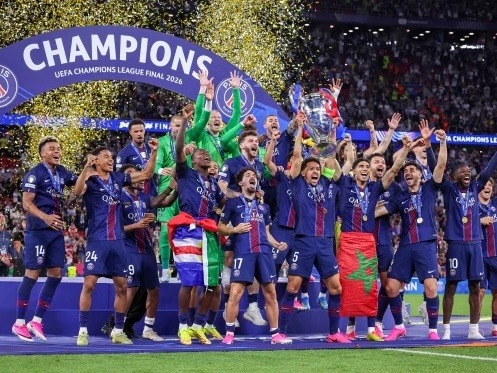
Champions League Final
The European club season came to a close in Budapest on Saturday, where Paris St. Germain once again found a way to finish the job on the biggest stage. The Champions League final was not quite the attacking showcase many expected, but it was a tense, high-level game between the two best teams in Europe. Arsenal struck early through Kai Havertz on a quick counter, PSG answered in the second half after Ousmane Dembélé converted a penalty won by Khvicha Kvaratskhelia, and the game eventually went to a shootout. PSG held their nerve, winning 4-3 on penalties after misses from Eberechi Eze and Gabriel, giving the French giants back-to-back Champions League titles.
It was a heartbreaking end for Arsenal, who had already completed a historic domestic season, winning their first Premier League title in 22 years. But for PSG, it confirmed what had been building all spring. The post-Mbappe project is no longer theoretical. Luis Enrique’s team has become the best club team in Europe, built less around one superstar and more around synchronized pressing, midfield control, fullback aggression and a rotating group of attackers who all seem to fit the same idea.
European Team of the Season
Goalkeeper: David Raya (Arsenal) Defenders: Nuno Mendes (PSG), Willian Pacho (PSG), Gabriel (Arsenal) Midfielders: Vitinha (PSG), Pedri (Barcelona), Bruno Fernandes (Manchester United) Forwards: Lamine Yamal (Barcelona), Khvicha Kvaratskhelia (PSG), Harry Kane (Bayern Munich), Michael Olise (Bayern Munich)
Raya gets the nod after anchoring the best defense in England and backing it up with a standout Champions League run. He finished with 19 clean sheets in the Premier League and 9 in the Champions League, while winning the Premier League Golden Glove for the third straight season. Arsenal’s defensive structure deserves plenty of credit, but Raya’s command, shot stopping and calm distribution were essential to everything they did.
Nuno Mendes was the best left back in Europe this season and a perfect fit for PSG’s suffocating, front-foot style. In Ligue 1, he led all fullbacks in combined goals and assists and finished third among fullbacks in big chances created. He carried that form into Europe as well, adding four goal contributions and creating eight big chances in the Champions League. His recovery speed lets PSG defend aggressively, but he is no longer just an athlete flying up the flank. He has become a complete fullback who can win his matchups defensively, carry the ball through pressure and still provide real end product in attack.
Willian Pacho was one of the defining defenders of PSG’s season. He played a major role in their Champions League title run. The statistical case is less flashy than it is for the attacking players, but he was near the top of PSG’s squad in clearances and aerial duels won while also completing passes at a high rate for a team that asks its centerbacks to build under pressure. His athleticism allowed Luis Enrique’s team to defend aggressively, squeeze the field and take risks in possession without looking constantly vulnerable in transition.
Gabriel has become one of the best pure defenders in Europe. He was named to UEFA’s Champions League Team of the Season and was a pillar of an Arsenal defense that finished with 19 clean sheets in all competitions. He also remained one of the most dangerous set piece targets in Europe, giving Arsenal value in both boxes. Saliba may be the smoother defender, but Gabriel is the tone setter, the physical presence and the player Arsenal most often relied on to win the first contact when games became chaotic.
Vitinha was the metronome of the best team in Europe and the player who made PSG’s midfield feel inevitable. He was named to the official Champions League Team of the Season and then put in a fitting capstone performance in the final, winning Player of the Match as PSG beat Arsenal on penalties. The attacking numbers were strong for a deep midfielder — including a Champions League hat trick against Tottenham and seven Ligue 1 assists — but his real value came in the control stats: the volume of touches, progressive passing, press resistance and ball retention that allowed PSG to squeeze games without losing structure. Kvaratskhelia supplied the knockout-round star power, but Vitinha was the player who gave Luis Enrique’s team its rhythm.
Pedri was my La Liga Player of the Year and one of the cleanest midfielders in Europe. He finished with 2 goals and 12 assists in all competitions, including nine in La Liga, but the better statistical case comes from the control numbers. He led La Liga midfielders in accurate passes, was top five in chances created, top five in successful dribbles, third in ball recoveries, and sixth in possessions won in the final third. That combination is what makes him so valuable. He is not just a pretty passer floating through games. He wins the ball, keeps it, advances it and makes Barcelona’s attack run differently because he turns pressure into possession and possession into control.
Bruno Fernandes put together one of the best creative seasons the Premier League has seen. He set a new Premier League single-season assists record with 21, added nine league goals and matched Kevin De Bruyne’s record for most big chances created in a Premier League season with 33. For a player who can sometimes be judged harshly because of how much he tries to force the issue, this was the version where all of that risk-taking became overwhelming production. He dragged Manchester United back into the Champions League almost through sheer creative volume.
Lamine Yamal is already well past the point of being graded on a curve because of his age. At 18 years old he is simply one of the most unstoppable attackers in the world. He finished with 24 goals and 17 assists in all competitions, including 16 goals and 11 assists in La Liga, despite beginning the season with an injury. He led the league by far in big chances created and was second in successful dribbles per game, giving Barcelona both final product and the constant one-on-one threat that bends defenses before the final pass is even played. If Pedri was the metronome for the Barca title run, Lamine was the final third virtuoso, turning possession into goals.
Khvicha Kvaratskhelia is here because of the Champions League. He was named UEFA’s Champions League Player of the Season after scoring 10 goals, adding six assists and winning the crucial penalty in the final. He also finished tied for third in the competition in assists and was PSG’s most dangerous attacking player throughout the knockout rounds. There were players with better domestic league resumes, but nobody had a bigger European campaign.
Michael Olise had a first full Bayern season that was a massive success. He finished with 22 goals and 26 assists in all competitions, hit the rare 15-goal, 15-assist mark in the Bundesliga, and tied for the Champions League assists lead with six. Bayern scored 122 Bundesliga goals, smashing the old league record, and Olise’s combination of passing, dribbling and end product made him the creative hub of the attack. Kane was the finisher, but Olise was often the player who turned Bayern’s possession into panic.
Player of the Year: Harry Kane
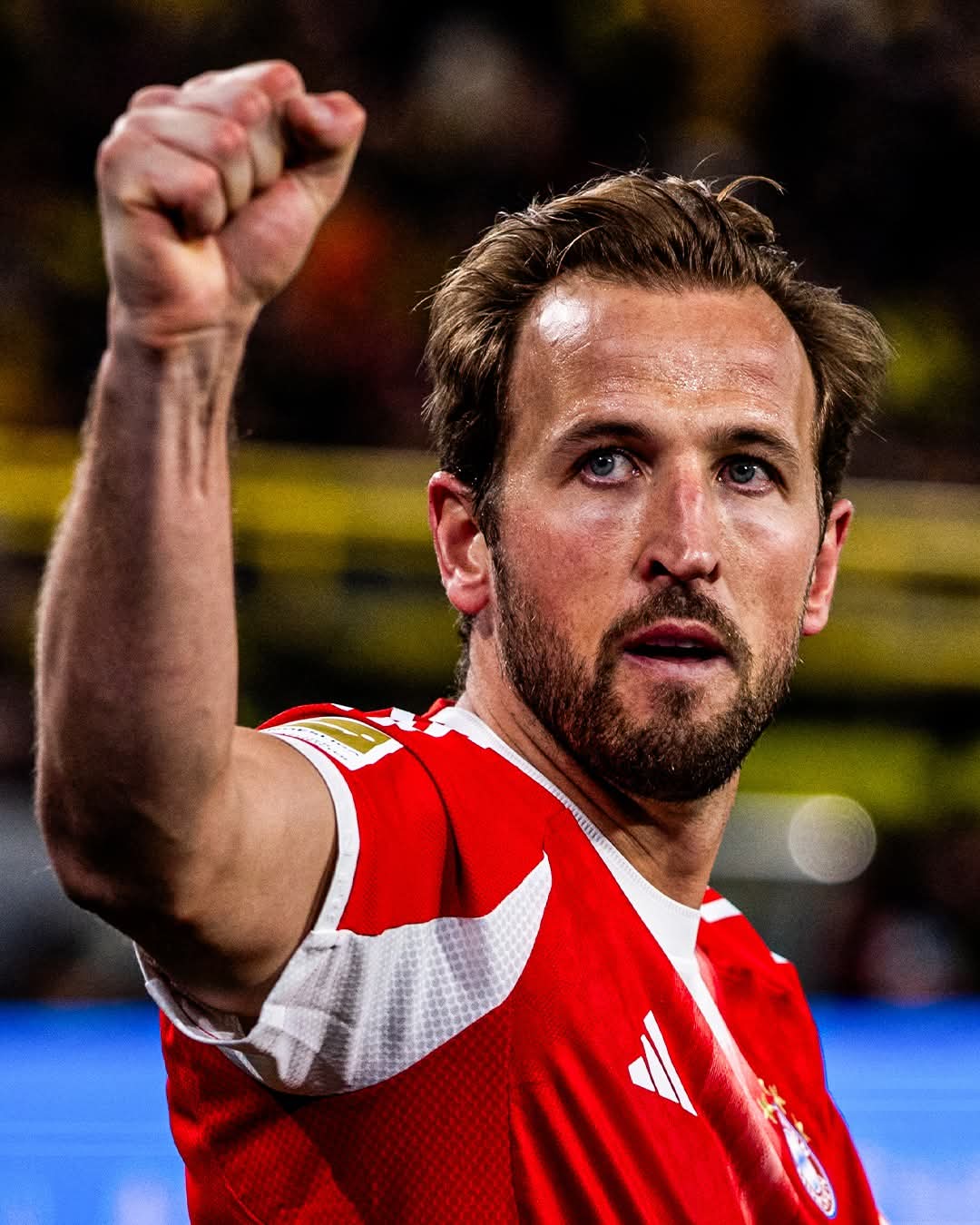
Harry Kane
Bayern Munich
For my money, Kane was the best player in Europe this season. PSG won the biggest trophy and Kvaratskhelia was the Champions League Player of the Season, so there is a very strong argument in that direction. Pedri had the best midfielder case, Yamal was the bright young star. But over the full campaign, nobody was more inevitable than Kane.
He finished with 61 goals across all competitions, including 36 in the Bundesliga and 14 in the Champions League, powering Bayern to another Bundesliga title and a historically explosive attacking season. He tied for the lead in Champions League combined goals and assists with Mbappé and Kvaratskhelia, and remained Bayern’s reference point in possession. Kane was not just finishing moves. He dropped into midfield, linked with Olise and Luis Diaz, and then still arrived in the box as the most dangerous scorer in Europe. That level of week-to-week production is difficult to argue against. A strong World Cup run with England could land him his first Ballon d’Or trophy.
Premier League
Arsenal finally got over the line, winning their first Premier League title since 2004 and ending the long wait that has followed Mikel Arteta’s rebuild. Manchester City pushed them, Manchester United surged to third after a turbulent start, and Aston Villa finished fourth while also winning the Europa League. Liverpool finished fifth, and because England secured an additional Champions League place through UEFA’s performance spot, the top five qualified for next year’s Champions League. Bournemouth and Sunderland were the surprise European qualifiers, while West Ham, Burnley and Wolves went down. Coventry and Ipswich earned automatic promotion from the Championship, while Hull City came up through the playoff.
Premier League Best XI
Goalkeeper: David Raya Defenders: Nico O’Reilly, William Saliba, Gabriel, Dominik Szoboszlai Midfielders: Declan Rice, Bruno Guimarães, Rayan Cherki, Bruno Fernandes Forwards: Igor Thiago, Erling Haaland
Player of the Year: Bruno Fernandes — Fernandes was the best player in the league and the driving force behind Manchester United’s return to the Champions League. He broke the Premier League single-season assist record with 21, scored 9 goals and led the league in chances created. For a player who can sometimes be judged harshly because of how much he tries to force the issue, this was the version where all of that risk-taking became overwhelming production.
La Liga
Barcelona repeated as Spanish champions, winning their 29th league title and finishing ahead of Real Madrid. Villarreal and Atletico Madrid took the other Champions League places, with Real Betis also completing the top five. Real Sociedad earned a Europa League spot by winning the Copa del Rey, while Celta Vigo finished sixth and grabbed the other Europa League place. Getafe finished seventh and qualified for the Conference League. At the bottom, Real Oviedo, Girona and Mallorca were relegated, with Mallorca going down in brutal fashion on a head-to-head tiebreaker despite winning on the final day.
La Liga Best XI
Goalkeeper: Joan García Defenders: Santiago Mouriño, Eric García, Pau Cubarsí, Fede Valverde Midfielders: Pedri, Fermín Forwards: Vinicius Jr., Lamine Yamal, Vedat Muriqi, Kylian Mbappé
Player of the Year: Pedri — Barcelona had plenty of attacking firepower, but Pedri was the player who made the whole machine work. His final line of 2 goals and 12 assists across 43 appearances does not fully capture his value, because so much of what he does comes before the final action. He gave Barcelona control in games that otherwise could have become chaotic, connected the back line to the attack, and looked like the closest thing Spain has had to a true Xavi/Iniesta heir in years.
Bundesliga
Bayern Munich returned to full domestic dominance, winning the Bundesliga and DFB-Pokal while putting up one of the most explosive attacking seasons in German soccer history. They scored 122 league goals, breaking the old Bundesliga record, with Kane and Olise forming the most productive attacking duo in Europe. Borussia Dortmund and RB Leipzig joined Bayern in the Champions League, while Stuttgart’s fourth-place finish capped another excellent season under Sebastian Hoeneß. St. Pauli and Heidenheim were automatically relegated, and Wolfsburg joined them after losing the playoff to Paderborn. Schalke and Elversberg earned automatic promotion, with Paderborn coming up through the playoff.
Bundesliga Best XI
Goalkeeper: Nübel Defenders: Grimaldo, Tah, Schlotterbeck, Ryerson Midfielders: García, Kimmich Forwards: Diomande, Luis Díaz, Olise, Kane
Player of the Year: Harry Kane — Kane’s Bundesliga season was ridiculous even before adding the cup and Champions League numbers. He was the focal point of a Bayern attack that broke the league scoring record and restored the club’s domestic superiority. Olise has a real argument here because of how complete his creative season was, but Kane’s goal total and week-to-week inevitability make him the pick.
Serie A
Inter Milan reclaimed the Scudetto, winning their 21st Serie A title and completing a domestic double under Cristian Chivu. Napoli also returned to the Champions League, Roma returned to the Champions League as well, while Como produced one of the great stories of the European season by finishing fourth under Cesc Fàbregas. Milan finished fifth and Juventus sixth, leaving both Italian giants outside the Champions League at the same time for the first time in decades. Pisa, Hellas Verona and Cremonese were relegated, with Cremonese going down after a wild final-day loss to Como. Venezia and Frosinone earned automatic promotion from Serie B, while Monza won the playoff to return to the top flight.
Serie A Best XI
Goalkeeper: Maignan Defenders: Miranda, Bastoni, Rrahmani, McKennie Midfielders: Barella, Çalhanoğlu, Dimarco, Nico Paz Forwards: Yıldız, Lautaro Martínez
Player of the Year: Federico Dimarco — Dimarco was the defining player of Inter’s title season. He finished with 7 goals and 18 assists in all competitions, leading in big chances created by a wide margin, an enormous return for a wingback. He gave Inter constant width, service and set piece quality. Inter had the best team in Italy, but Dimarco was the player who most consistently tilted games in their favor.
Ligue 1
Paris St. Germain won their fifth straight Ligue 1 title and 14th overall, holding off a surprisingly stubborn challenge from Lens before beating them 2-0 late in the season to clinch the league. Lens finished second, secured Champions League football and then added the Coupe de France, making it one of the best seasons in club history. Nantes and Metz were relegated automatically, while Nice survived the relegation playoff against Saint-Étienne after a miserable season that ended with Dante helping them stay up before retiring. Troyes and Le Mans earned promotion from Ligue 2.
Ligue 1 Best XI
Goalkeeper: Koffi Defenders: Nuno Mendes, Pacho, Sarr, Hakimi Midfielders: Sangaré, Vitinha, João Neves Forwards: Greenwood, Lepaul, Kvaratskhelia
Player of the Year: Vitinha — Vitinha was the best midfielder in France and one of the key players in PSG’s evolution from a team built around stars into a team built around control. He gave Luis Enrique exactly what he needed: press resistance, tempo, defensive intelligence and the ability to keep PSG connected when games opened up. Dembélé had the flashier domestic award case and Kvaratskhelia had the Champions League moment, but Vitinha was the player who made PSG’s midfield work every week. He was also named Player of the Match in the Champions League final, which felt like a fitting capstone to his season.