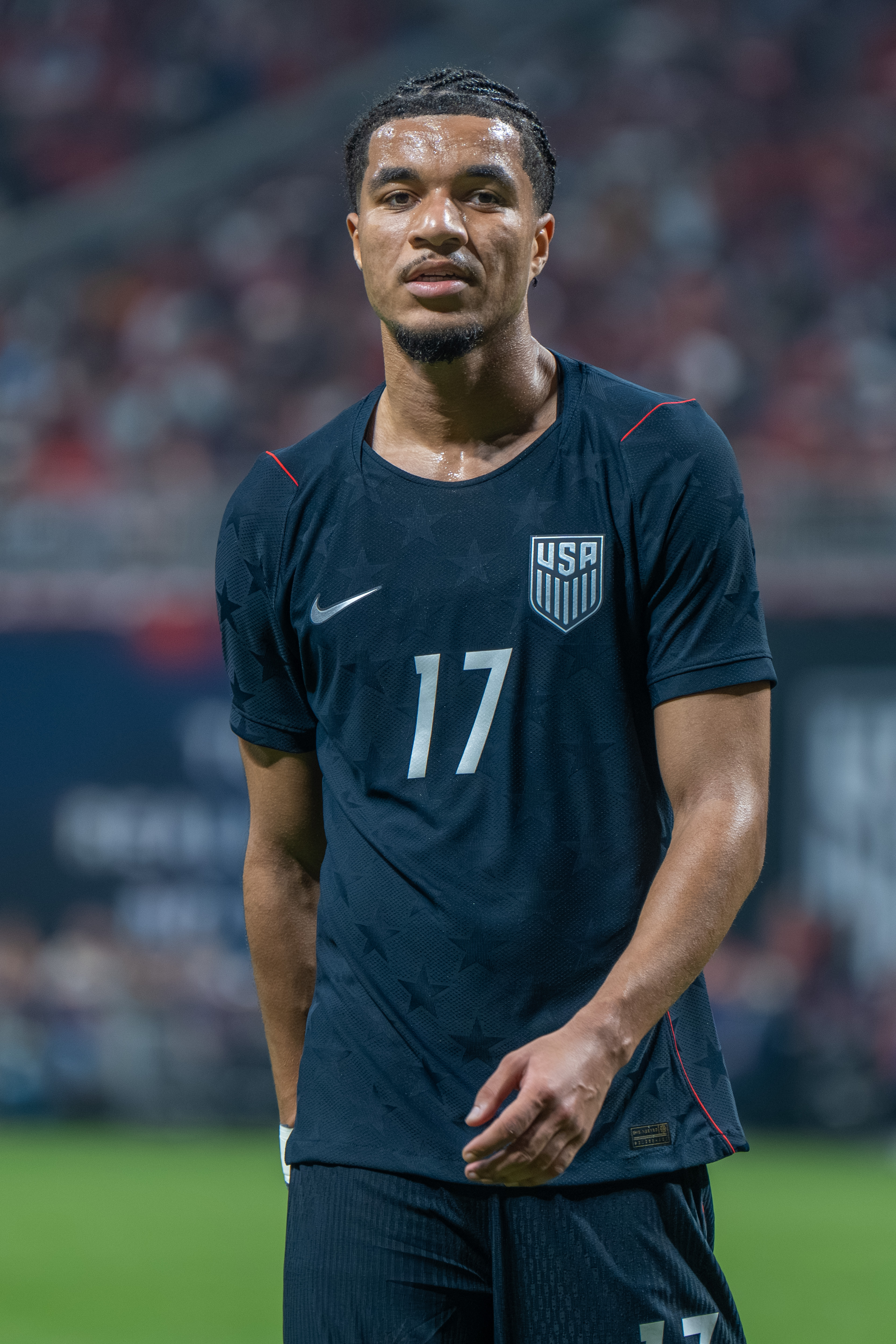
After years of buildup, the wait is over. On Friday night the U.S. Men’s National Team kicks off its home World Cup, and for all the noise of the last several months — the roster debates, the injury scares, the up-and-down friendlies — it all comes down to ninety minutes against Paraguay to get the tournament started on the right foot.
Kickoff: Friday, June 12 — 9:00 p.m. ET / 6:00 p.m. local
Venue: Los Angeles Stadium (SoFi Stadium), Inglewood, CA
TV/Stream: FOX and FOX One
This is not technically a must-win game, because the expanded World Cup format gives teams a little more margin for error. But for all practical purposes, this is the game the US needs to win if they want this tournament to become anything more than a stressful group-stage grind. Paraguay are a solid team. They are a South American team that will not be overwhelmed by the moment. But if the US has any ambition of winning the group and setting up a manageable knockout path, they need three points here.
The good news is that the final two warm-up games provided more reasons for optimism than concern, even if neither performance was perfect.
Warm-Up Match Recaps
Senegal (3-2 Win)
In the first of the two warm-up matches against Senegal (FIFA rank 14), the U.S. was clearly the better team in the first half, controlling the run of play and creating the bulk of the danger on quick builds and in transition. The second half got disjointed in a hurry after both teams made massive substitutions, with the US replacing almost the entire team at halftime. That’s to be expected in a friendly of this sort, but made it hard to read too much into the final 45 minutes.
In that first half, the US played some of its sharpest attacking soccer under Mauricio Pochettino. Christian Pulisic answered any lingering questions about his club form with a goal and an assist and a constant stream of danger. Ricardo Pepi looked sharp up top, showing great vision to tee up the opener and a deft touch on the second. And Alex Freeman continued to make his case, flashing real recovery speed on the back end and dropping an excellent pass to set up a goal going the other way.
Tactically it was the back three again, with Jedi Robinson and Sergiño Dest as the widest players and the team pressing high. The US looked vulnerable in transition, especially when the wingbacks were high and the back line had to defend large spaces, which led to most of the danger on the day for Senegal. That’s part of the trade-off with this approach: the press wins balls in good areas, but can allow the team to be caught on counter-attacks, especially when they lose the ball in the middle of the field.
Alex Freeman made a strong case for the starting eleven, as he continued to look like one of the big stories of the roster, showing the recovery speed and physical tools that make him an intriguing fit as the right-sided center back in this system. Miles Robinson had some moments on the ball that highlighted the need for Chris Richards to return to the lineup as soon as possible.
Germany (2-1 Loss)
This was the one that looked like a dress rehearsal for the opener, and Pochettino more or less rolled out what should be the starting lineup for Friday, likely with Chris Richards in place of Miles Robinson. The Americans started slow and got punished early, with Kai Havertz heading home off a set piece in the opening minutes, set up by a clever pick from Nico Schlotterbeck on Tim Ream that sprung Havertz wide open. Matt Freese was hesitant to come off his line, leaving Havertz with a simple header with ample space to shoot. However, the U.S. settled after the goal and took the upper hand in the latter stages of the first half, leveling things through an absolute thunderbolt from Jedi Robinson off a Pulisic corner and generating several other good looks, with constant pressure on the German goal towards the end of the half. Leroy Sané restored Germany’s lead after halftime, and that was the difference.
The big tactical takeaway was that the midfield question seems to have an answer. Tillman dropped deeper alongside Tyler Adams, with Weston McKennie pushing up into the attacking-mid role in the half-space, suggesting that will be the setup for the group stage matches. That allows McKennie to get into the box and be a target for crosses and to create chaos around the penalty area like he did for Juventus this season.
Freeman, again in this game, looked like he belongs at this level, at times simply out-muscling elite German attackers. Pulisic was all over the place in the first half, stressing the German back line, and Tillman’s touches stood out once more. It appears he is ahead of Gio Reyna in the pecking order now, bringing more bite defensively while offering similar poise and creativity on the ball.
Set-pieces are the largest concern coming out of this game. The US will need to do better on both sides of the ball. Poor set-piece defending is an easy way to let a lesser opponent into the game, and the US will need to do better on their own set pieces if they want to take down some of the elite teams in this tournament. They had ten corners to just two for Germany but weren’t able to produce anything other than the miraculous blast from Robinson.
Paraguay Preview
What We Learned in November
The good news is that the U.S. has already seen this Paraguay side recently, and the result was a positive one.
The two teams met in a friendly back on November 15 in Chester, Pennsylvania, and the U.S. came away with a 2-1 win behind a Gio Reyna opener and a Folarin Balogun winner. What makes that result more impressive is that the Americans did it while missing several of their key players — Pulisic, McKennie, Adams, Tillman — and still controlled the game. The 2-1 final flattered Paraguay a bit. The U.S. ran 56% possession, racked up 23 touches in the opponent’s box to Paraguay’s 11, and created three big chances to one. This was more of a dominant performance dressed up as a one-goal game. However, Paraguay did demonstrate how they can be dangerous, and those lessons apply to Friday’s game.
Defensively, Paraguay set up in a 4-4-2 with a line of confrontation around midfield, content to sit rather than press high. Expect more of the same in the opener. They’ll likely look to stay compact, frustrate the U.S., and pick their moments to break. The one way Paraguay can hurt this team is on quick transitions, the exact soft spot that showed up in the Senegal friendly. Paraguay equalized in November after a simple direct ball exposed poor spacing in the US back line. That is the exact kind of goal the US cannot concede on Friday.
That same approach is likely the template again for Paraguay. Under Gustavo Alfaro, they are not going to be naive. They qualified out of CONMEBOL, conceding only 10 goals in 18 qualifiers. That included a nine-match unbeaten run and wins over Brazil, Argentina, and Uruguay, demonstrating their defensive stubbornness and resiliency.
Injury Questions
The biggest injury news for this game comes on the Paraguay side, where they will likely be without one of their best attackers, Julio Enciso, who was stretchered off in tears in their final warm-up against Nicaragua. That is a major break for the US. Paraguay still has dangerous pieces, as we’ll get to, but Enciso is their most dynamic attacker in tight spaces and their best bet to create something out of nothing.
For the U.S., the story is Chris Richards. He tore two ankle ligaments playing for Crystal Palace on May 17, and missed both send-off friendlies. He’s been working his way back into team training, but his fitness for Friday is still in doubt. Richards was supposed to be the anchor of this back line, so if he can’t go, the partner for Ream becomes the most important call Pochettino makes all week. Miles Robinson got the start against Germany but didn’t have a convincing performance. Mark McKenzie started the Senegal match and seems the more likely replacement if Richards can’t go. Neither inspires the confidence Richards does, and against a team that wants to counter, the center-back pairing needs to be switched on for all ninety minutes.
What to Expect on Friday
I expect the US starting lineup to be the same as the Germany game with the exception of center back. That means Balogun leading the front line, with Pulisic and McKennie tucked in as the attacking mids in the half space. Sergiño Dest and Antonee Robinson as the wingbacks providing the width in attack. Adams and Tillman as the deeper lying midfielders, with Tillman pushing farther forward in attack and occasionally rotating with McKennie. And then Ream, Richards (or McKenzie), and Freeman across the back line with Freese in goal.
Those wingbacks will be a key to this game for the US attack. Dest is likely getting the nod over Tim Weah because his flair and creativity on the ball are better suited for the kind of compact defense Paraguay will try to play. Weah is more valuable when he can stretch the line and get in behind or send in dangerous crosses. On the other side, Jedi Robinson will work tirelessly to make overlapping runs that open up space for Pulisic to operate in. He also showed he can be dangerous if he gets a chance in front of goal.
On the Paraguay side, even with Enciso sidelined, there is enough quality to punish a careless back line. A few names stand out for them. Miguel Almirón is the one the US has to track most closely. Back at Atlanta United after six years at Newcastle, he is Paraguay’s main creative outlet, the player who finds pockets of space and drives attacks forward, exactly the kind of moment Pochettino’s high line tends to invite. Antonio Sanabria is the poacher to watch inside the box. He enjoyed a breakout qualifying campaign and has a habit of scoring big goals, including the winner against runaway group leaders Argentina in Asunción.
In midfield, Brighton’s Diego Gómez is the engine that makes Alfaro’s side tick, press-resistant and tidy on the ball, and dangerous enough that he scored the match-winner that stunned Brazil during qualifying. Captain Gustavo Gómez anchors the defense and doubles as a real set-piece threat at the other end, which matters given how shaky the US looked defending dead balls against Germany.
The Path to Victory
For the US, the path to winning is pretty clear.
First, they have to win in transition. Defensively, this is the obvious danger in Pochettino’s setup. The wingbacks push high, the team presses aggressively, and the US wants to create danger through quick builds and turnovers. That can be exciting, but it also leaves a lot of grass behind the first wave of pressure. Paraguay will absolutely test whether the US back three and Adams can handle those moments. On the flip side, the US will look to take advantage whenever they can catch Paraguay out of their shape to quickly exploit cracks in the defense. Balogun could be a key in those quick attacking transitions.
Second, the US has to be more dangerous from set pieces, while not giving away cheap ones. The Germany goal was a flashing warning sign. In November the US got their first goal after recovering a poor clearance on a corner kick and quickly getting a second cross in. The US will likely have the field tilted in their favor; they need to take advantage if they get a large number of corners or free kicks. Paraguay will surely be looking to take advantage of any free kicks they get within range of the US goal. Diego Gómez and Miguel Almirón can deliver the ball for them and Antonio Sanabria gives them a target.
Third, the US needs to show patience breaking down Paraguay when they sit deep. Paraguay’s block tries to suffocate the central spaces. The danger is that Paraguay’s block turns the game into U.S. possession around the horseshoe, with the ball going wide and crosses coming into a packed box. The US need to leverage the creativity and lock-picking ability of Pulisic, Dest, Tillman and McKennie to find high quality chances instead of getting frustrated and lumping in low quality crosses or long range shots. With these players and a sharp Pulisic, they have the quality to find those gaps, they just need to work the ball enough to exploit it.
Finally, the US needs to score first. Paraguay is dangerous enough in transition even in a neutral game state. If they go up 1-0, the game could become deeply uncomfortable. They can sit deeper, slow everything down, foul intelligently, and force the US into the kind of anxious possession that has undone them in past tournaments. If the US scores first, Paraguay has to open up, and that is when Pulisic, Dest, Jedi, McKennie, and Balogun can find more space.
However, if the US can’t open the game up early or falls behind, they do have some options off the bench to spark the attack. Gio Reyna gives the U.S. another passer who can unlock a packed defense with one touch or one disguised ball between the lines. Tim Weah offers a very different kind of threat from Dest, with more direct running, more pace in behind, and the ability to turn the game into a series of foot races if Paraguay’s legs start to go. Ricardo Pepi is probably the cleanest like-for-like change up top if Balogun needs to come off, and he has looked sharp enough in these warm-up games to deserve a role. Haji Wright gives them the more chaotic option, a bigger body who can attack crosses, occupy center backs, and make the game uncomfortable if the U.S. is chasing a goal late. That depth matters in a game like this, because Paraguay’s whole plan is to keep it tight long enough for the favorite to get frustrated.
This is the type of game the US should win, but it is not the type of game they can casually walk through. Paraguay is too organized, too experienced, and too comfortable in ugly games for that. The US has the better talent, the home crowd, and a system that seems to be coming together at the right time.
A fast start in front of a home crowd would do wonders, for a group that projects to be tightly contested with Türkiye, and also for the belief heading into a tournament where this team is hoping to make a run beyond the usual expectations. Win this match cleanly and they set themselves up for a battle at the top of the group.
For years, we have talked about this tournament as the moment for this generation. Friday night is when the talking finally stops.